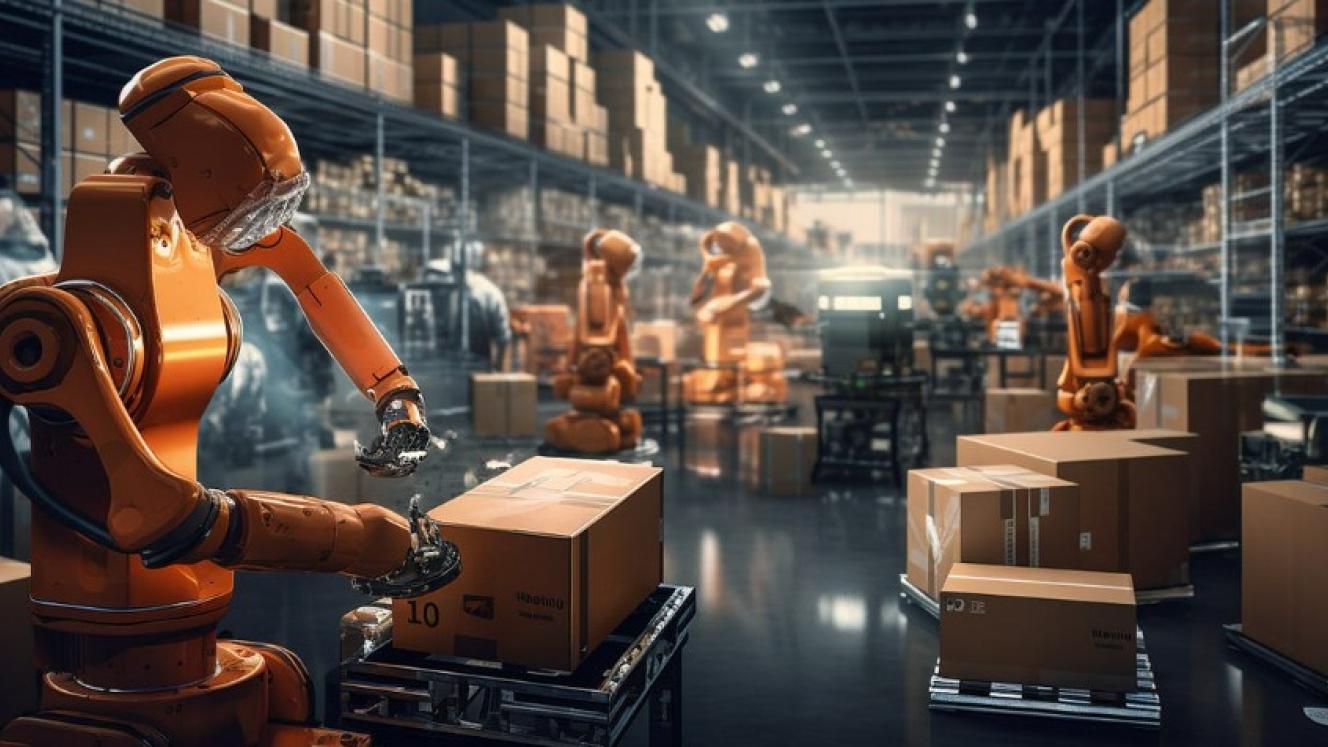
The rand may be holding firm against the US dollar at the moment, having gained 3.78% to the greenback in year-to-date data, according to Exchange-Rates.org and the US Fed, but it’s not enough to materially change automated warehousing dynamics.
Or the local lack thereof, says Martin Bailey of Industrial Logistic Services.
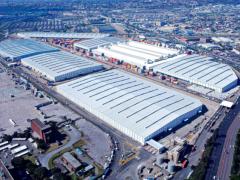
Speaking to Freight News about the mushrooming of warehouses in logistical nodes such as Riverside on the R21 north of OR Tambo International Airport, he said persistent devaluation of the rand against the dollar over the past three decades had substantially weakened the local currency’s buying power.
Current gains made against the dollar, resulting in inflation easing to its lowest point in two decades, are also not going to make much of an impact.
“The decline of the rand matches almost exactly what robots cost 30 years ago,” Bailey says.
In comparison, the proliferation of robotics and subsequent price reduction for more stable currencies with longer-term parity against the dollar, means automation costs a seventh to a tenth of the price of what it used to cost in the EU, for example.
“We’re simply not in European conditions,” Bailey says.
So, is automation going to flood the local market if the rand’s show against the dollar continues for long enough?
“Unlikely,” he says.
Given the supposed threat of artificial intelligence (AI) and automation to personnel within the warehousing sector, the rand’s status as a poor performer is actually playing into local labour’s favour.
Says Bailey: “Even if Elon Musk launches his new robots at $30 000, you still won’t replace a person.”
As for AI, its immediate efficacy and affordability compared to robotics makes it a serious contender for potentially replacing professionals who simply can’t compete in the computing department.
“Where AI is going at the moment, that’s what we need to be watching.”
The questions warehousing experts should really be asking, Bailey says, are ”how AI is going to pick and order, how it’s going to store and how it’s going to deliver”.
Although it may take initial consultation to figure out how to use AI tools properly, it’s bound to eventually just do what it’s aimed to do – take over in the research department.
Talking about the speed of AI search functionalities, Bailey says it’s making warehouse planning simpler and faster.
“Figuring out things like what drainage to use, what the sewage system should be – it’s just better.”