The deepening commercial and military cooperation between Russia and China in the Arctic has raised concerns among Western governments and maritime stakeholders, who view the partnership as a challenge to established norms and influence in the region.
In a report on the risk outlook for the North Sea Route (NSR), Metis Insights cautions that control over Arctic sea lanes carries strategic implications, including the potential to levy transit fees or restrict access to certain vessels.
The acceleration of climate change and retreating sea ice in the North Pole has raised the prospect of new shipping routes through the region and continues to draw interest from the global maritime industry.
The report, compiled by Dryad global analyst Brianna Campbell, confirms that interest in the NSR has been growing for more than two decades, and shipowners and policymakers have monitored the potential of Arctic passages to shorten transit times between Europe and Asia.
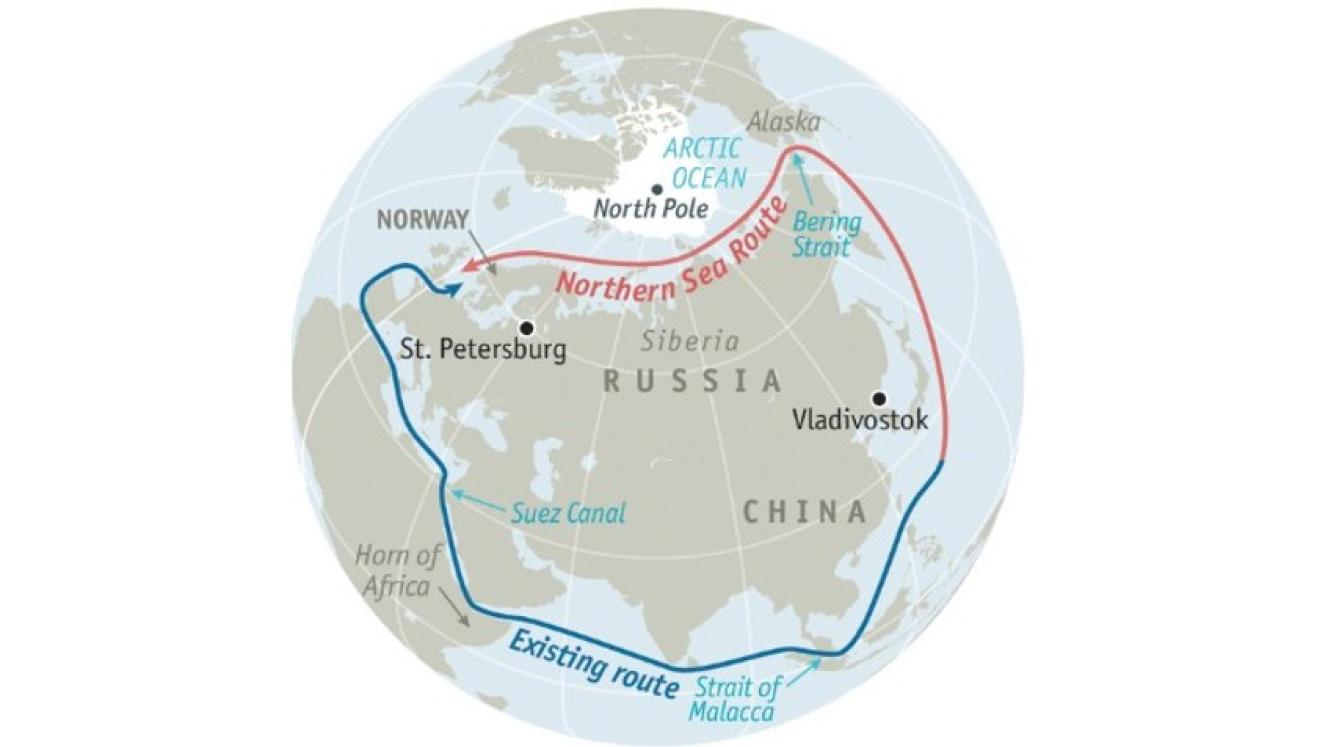
One of these routes is the ‘Northeast Passage’, which runs along the northern coastline of Eurasia and, under favourable conditions, can reduce voyage times by as much as 50% compared with the traditional route via the Suez Canal.
The report highlights that Russia has emerged as the primary architect of Arctic shipping development, investing heavily in infrastructure and asserting control over the NSR, a core segment of the Northeast Passage. Despite expectations that Arctic shipping will expand over the long term, traffic along the NSR has grown only gradually.
Metis says “industry analysts” cite several factors constraining wider uptake.
Predominantly, these are harsh weather conditions, limited port and rescue infrastructure, and navigational risks.
In addition to these operational deterrents, the NSR is only economically competitive with established routes under specific market and environmental conditions. Sanctions and environmental concerns have also led many Western shipping companies to avoid the route.
At present, most traffic on the NSR consists of exports from Russian Arctic energy projects, largely destined for China, the report has found.
Through diplomatic initiatives, Russia has encouraged Chinese participation under Beijing’s Polar Silk Road policy. Chinese operators are increasingly making use of the Northeast Passage for cargo movements between Europe and Asia.
Against the background of US President Donald Trump’s expansionist rhetoric involving geostrategic influence in the Arctic, NSR dynamics have renewed attention on Greenland, Metis says.
The report clarifies that Greenland sits astride key maritime chokepoints where several North Sea routes converge, and is increasingly seen as a strategically significant asset in future Arctic power projection.
At the same time, observers have noted a worrying trend of regulatory erosion and safety violations along the NSR. With Russia operating the route largely beyond international oversight, so-called ‘shadow fleet’ vessels transporting Russian oil have been reported to transit the region, often without adequate ice-class certification or icebreaker support.
Maritime safety experts warn that the poor condition of many of these vessels, combined with extreme Arctic conditions and limited search-and-rescue capacity, significantly heighten the risk of serious maritime incidents. Regional governance mechanisms capable of addressing these concerns remain constrained, particularly while relations between Russia and Western states continue to deteriorate.