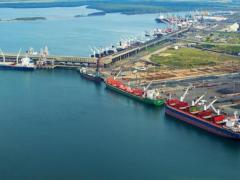
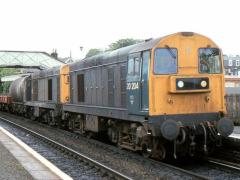
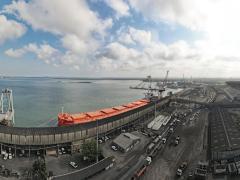
Focus on Coega has had negative impact TERRY HUTSON NOT ALL that long ago the port of Richards Bay was referred to as the African Singapore. It’s an expression seldom used today except as perhaps a reminder of more hopeful days – so what went wrong? The crux of the matter is that some of the port’s terminals have not performed as well as they once did. Port users say the major factor influencing this is under-investment in terminal infrastructure – even reaching the point where some shipping lines felt obliged to ‘loan’ equipment to SA Port Operations to work the cargo. Happily that is one problem that is now being addressed. The export of coal through the port has also been a disappointment, with underperformance from the mines and the railway. And yet this was during a period of talk about providing emerging mining groups with access to the terminal. Over the past year RBCT handled well below forecast figures. On the horizon for the coal terminal however things are looking up. RBCT’s fifth berth recently went into service and some clarity appears to have been reached with emerging miners to determine which ones will have access to the terminal and to what degree. Spoornet for its part will soon begin taking delivery of 110 new locomotives for the coal line and has entered into agreements that will see volume capacity along the line increasing to 78mt annually – up by 6mt. It will however be another seven years before Spoornet is able to ramp up to the much hyped 91mt annually, and even then provided that contracts are entered into. Challenges that face the multi purpose and dry bulk terminals at the port relate partly to a lack of infrastructural spending by Transnet in recent years. Business interests in the Richards Bay area believe, with some justification, that when Transnet shifted focus on developing the new port at Ngqura it was at the expense of the Zululand port. They say that Transnet has only belatedly woken to the realisation that market forces are often more important than political ambitions. But even now, as the realisation hits home that Durban will run out of container capacity in three years time, the emphasis remains on diverting excess container traffic to the Eastern Cape. This while Richards Bay, Durban’s neighbour and the closest port to Gauteng, remains without suitable equipment to handle containers. According to the port engineers the NPA has ambitious plans for a short to medium term expansion programme that includes additional specialist berths – among them a container handling area and ship repair facility. In the longer term the one thing Richards Bay has in abundance is space and the Port Master Plan envisages the harbour developing several kilometres inland towards Empangeni and the N-2 highway. Sceptics however point to the time already taken over replacing the port helicopter which crashed in 2005, which they say impacts on the efficient handling of ships in the port. “Where’s the urgency over anything,” they ask. Sapo meanwhile has embarked of a programme of re-equipping terminals with new infrastructure and equipment – the arrival in the past year of a mobile crane was one of the first positive signs. In another the port’s system of conveyors is being overhauled or replaced. In another the R800 million expansion and refurbishment of the dry-bulk terminal is currently under way and that will increase capacity at the DBT from 14mt to 28mt annually. Maybe somewhere in the future there’s hope that Richards Bay may again be thought of as Africa’s Singapore.
Richards Bay expansion plan includes container handling facility
Comments | 0
© Now Media. This content is protected by copyright and may not be adapted or republished. If you would like to discuss cooperation opportunities, please contact: editor@freightnews.co.za.