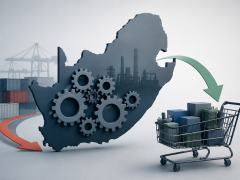
The Road Freight Association (RFA) has reacted with scepticism to Transnet Port Terminals’ (TPT) announcement of a new container handling fuel surcharge, dubbed the “fuel neutrality surcharge”.
The surcharge, at an initial rate of R52 per container, takes effect in May. It operates on a sliding scale tied to coastal diesel prices and could increase significantly – potentially tripling – if fuel costs continue to climb.
RFA CEO Gavin Kelly said the association could only react “with mirth” at the choice of name for the charge as a “fuel neutrality surcharge”, while raising concerns about its impact on the logistics chain and ultimate consumers.
“Firstly, there is nothing ‘neutral' about adding R52, or any cost, into the logistics chain,” Kelly said.
“Secondly, when the association last loaded a container, there was no engine that consumed fuel. What then is this ‘surcharge’ for, the RTGs? Other container moving and stacking equipment? Then say so. Don’t call it a ‘surcharge,’” he said.
He added that the additional cost would be passed to the customer rather than the road freight transporter. However, he highlighted uncertainty around exactly where and how the payment would be applied.
“There are references to the ‘shipping lines’ – and if so, then that would be a transaction between the shipping line and the entity that booked the container, not the road freight transporter,” he said.
“However, experience has taught us that through bad communication and planning, the first application of the ‘surcharge’ will most probably be expected from the truck driver (the representative of the transporter).”
Kelly said while the surcharge itself would not be borne directly by the road transporter, it would still feed into broader cost pressures. Transporters will continue to manage their own diesel and petrol costs, depending on contractual arrangements with customers.
“The cost (surcharge) will be added to the transport bill of the customer. The total logistics cost will increase and be reflected in upward pressure on the final price of the goods when purchased by the consumer,” he said.
“The added cost will be applied immediately by customers into their transport cost, as the surcharge will be ‘immediately’ payable, and is not borne by the transporter per se. The transporter will have the direct diesel/petrol cost to contend with, depending on the contract between the transporter and the customer. This is more cost into the supply chain. More pressure on the consumer.”
The introduction of the charge comes amid rising fuel prices linked to global factors, including conflict in the Middle East.
TPT has described the measure as a means to recover fuel-related operating costs for diesel-powered equipment such as straddle carriers, hauliers, rubber-tyred gantry cranes (RTGs) and generators.