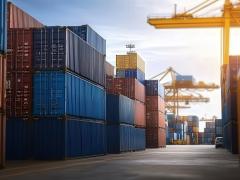
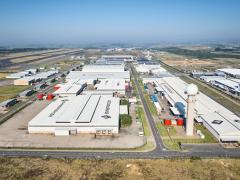
Gauteng will have to pull out all the stops if it wants to retain its economic hub status as a leading role-player in southern Africa. “There is no time for complacency,” says Liz Whitehouse, director of African information specialists Whitehouse & Associates. “There are so many developments taking place in the region that Gauteng is going to have to be very careful about being complacent about its position as it might find itself no longer a front-runner.” With major infrastructure development under way in the form of new ports, roads and railways in countries such as Namibia, Angola and Mozambique it is no longer a given that South Africa and therefore Gauteng is the central roleplayer. “The developments under way have to be monitored as a lot of them revolve around logistics and transport and will impact significantly on Gauteng,” says Whitehouse. “Traditionally, because of the Port of Durban being the primary entry and exit point for cargo destined for southern Africa, Gauteng has managed to maintain its hub position. But that could change as other ports develop and transport routes are established, bypassing Gauteng completely.” While the province will continue to play a pivotal role in that it serves as the headquarters for major decision-makers in the project and logistics fields, it does not mean Gauteng will continue to be the gateway into southern Africa via Durban. “It makes sense for headquarters to be in Gauteng as it has all the necessary infrastructure in place to ensure smooth operations. These very decisionmakers are, however, starting to look carefully at what goods go where and how they can be channelled most effectively.” More than anything else, says Whitehouse, the port developments in southern Africa are bringing choice into the market. “The dependency on the Port of Durban is slowly but surely diminishing and that does have an impact on trade. A lot of warehouses in Gauteng for instance are being utilised purely because it makes sense to do so to pick up goods on the return trip from delivering copper for instance to the port. But should another port be used this will no longer be the case.” Whitehouse believes it is time that provinces such as Gauteng take a long hard look to see how they can remain viable in the future. “If one looks at Namibia – and in particular Walvis Bay – then we are up for competition. They are working very hard to market themselves and to grab business. Over and above that they have taken the time to really look at what the market needs and what they need to do to provide that – and to improve trade for the region and the country as a whole.” According to Whitehouse, countries like Namibia and Mauritius are succeeding in their attempts to position themselves as viable trade hubs because of these approaches. “Mauritius is a good example of a country systematically setting itself up as a textile hub, diversifying its economy and moving away from sugar,” she said. “While there is value in the argument that they are a small country and it’s easy to manage the process, there are lessons to be taken from this country. They have developed a central strategy that is simple in its approach.” Whitehouse says with no complex strategies at play in the country and with goals clearly outlined, countries like Mauritius and Namibia and specific regions within these countries are able to focus on what they want to accomplish. “It is essential that Gauteng has a strategy in place, which I am not so sure it has. We cannot be complacent or rest on our laurels thinking that will be enough to maintain our position in the region. We will lose our competitive advantage and it will be very difficult to grab that market back once it is lost.” INSERT & CAPTION Mauritius is a good example of a country systematically setting itself up as a textile hub, diversifying its economy and moving away from sugar. – Liz Whitehouse
Regional port developments challenge Gauteng's hub supremacy
Comments | 0
© Now Media. This content is protected by copyright and may not be adapted or republished. If you would like to discuss cooperation opportunities, please contact: editor@freightnews.co.za.