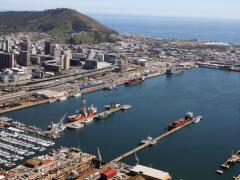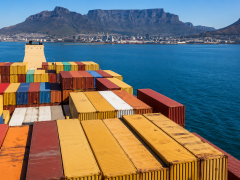
An export consignment of urgently needed medical equipment destined for the Port of Jebel Ali is still making its way there after it left the Port of Durban on February 28 – the same day that the United States and Israel started attacking Iran.
In the ensuing supply chain chaos caused by the Persian Gulf conflict, Value Logistics has had to airfreight 18 tonnes of standby cargo into Dubai to make up for the delay of the initial consignment.
The company’s divisional director, Stephen Segal, has said that the airfreight by Emirates into the UAE has come at significant additional cost to its client, and that the delayed consignment, consisting of two containers, has incurred a shipping line surcharge of more than $4 000 per box.
A voyage that would have lasted just over two weeks is now about four times as long, and the adjusted date of arrival in Jebel Ali is Wednesday, April 22.
Because of war-zone risk, the two boxes were dropped off in India’s Port of Mundra before being transhipped to Arabia’s Port of Jeddah for a road freight leg to Jebel Ali.
However, the recent signing of a tenuous truce between the US and Iran has seen the boxes travelling to Djibouti, from where the last shipping leg back across the Arabian Sea and through the Port of Hormuz is expected.
However, that was on Friday.
Given that the situation in the narrow choke point is again teetering on a knife-edge following the US Navy’s armed demobilisation of a blacklisted container vessel flagged by Iran, the 4 800-TEU Touska, it remains unclear whether the boxes will make it to Jebel Ali by this Wednesday.
Commenting on the shipping line’s decision to drop off their client’s cargo in Mundra, Segal said: “I always understood that once they issue a bill for the port of loading to a port of discharge, they can take as long as they want and how they want, as long as the cargo is finally delivered to its final destination on the bill.”
However, the Mundra drop-off has proved that shipping lines, operating under force majeure conditions as is currently the case, can declare that a voyage has ended at a certain point because of risk and related insurance.
He said during the port disruption caused by the Covid pandemic, and when Durban was at the height of congestion, shipping lines were dropping off boxes at ports in Mauritius and Mozambique, but ultimately still got cargo to Durban.
“This is clearly not the case anymore as this (the Persian Gulf conflict) is a whole different situation.”
Additionally, when it was considered to declare the Mundra drop-off as an import into India, customs complexities prohibited Value from this option and forced them to tranship the cargo using the same shipping line.
He said the lines were profiting from a situation that was extremely restrictive for forwarders, and that the best thing to do was constantly keep clients abreast of matters, specifically delays and related freight costs.
Clients who can afford it stress that cargo can’t stop just because of conflict, Segal said.
“We inform our clients of inherent risk, but they say, ‘we don’t care, just get it on the vessel, we’ll take the risk.’ So, we keep on shipping, but we have to wait and see how far the line takes it.”
He added that more boxes that were packed and ready for the water had been unpacked and sent to bonded storage as the war situation in the Middle East unfolded.