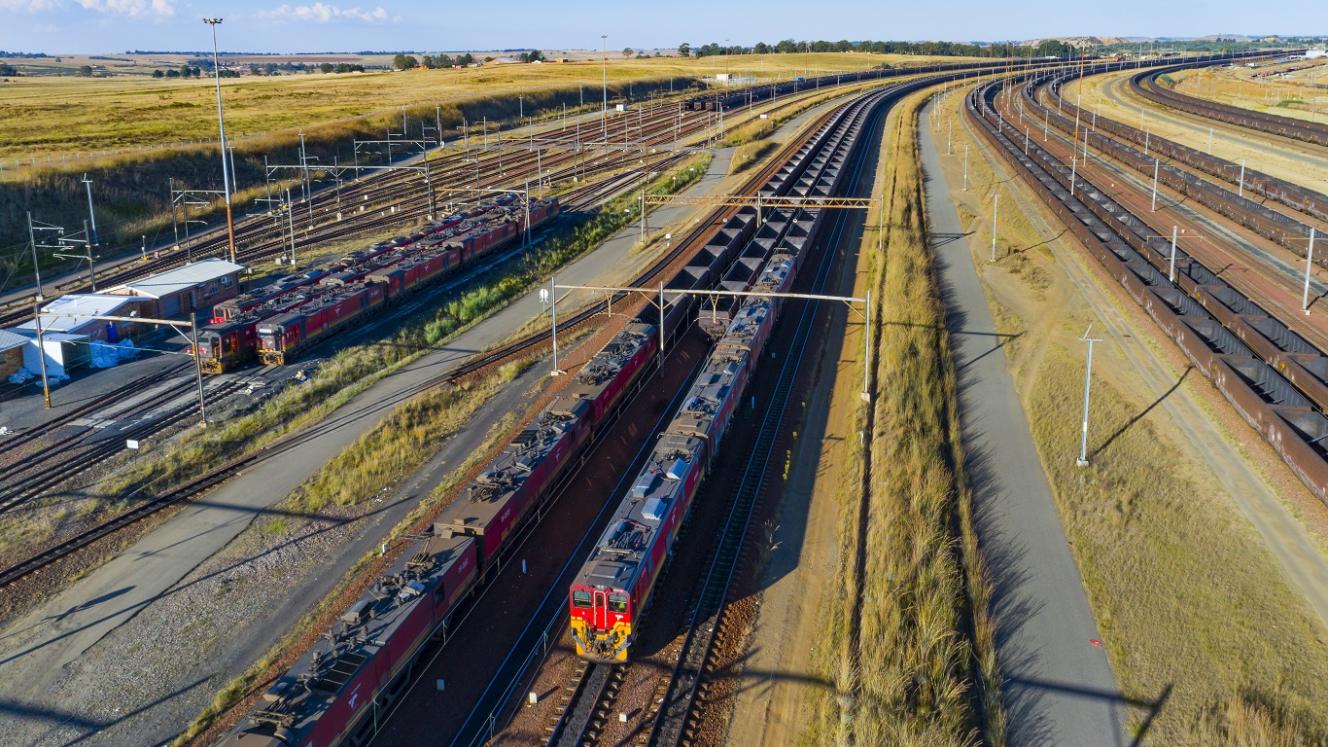
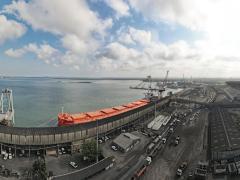
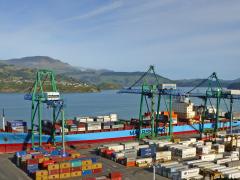
The Walvis Bay Corridor Group is on a mission to reduce transit times, reduce supply chain costs and add value for Gauteng shippers. That was the message from WBCG business development executive Johny Smith at last week’s official opening of its Gauteng office. “While the Port of Walvis Bay is still small, for us it’s all about service delivery and efficiency. “Since 1994 Namport has invested close to half a billion rand in infrastructure development. “The deepening of the port in 2000 paved the way for direct calls from Maersk and MACS and today the port offers direct links from Europe, South America, the Far East and North America. “We will continue to invest in the future, with at least R1.3bn earmarked over the next 3 to 5 years – and that includes the building of an additional quay. “We envisage that within five years we’ll have the capacity to handle 500 000 teus a year.” The Trans Kalahari Corridor is clearly a faster alternative for Gauteng shippers, says Smith. “At this stage we’re looking at transit times of 48 hours from Walvis Bay to Johannesburg, with around 30 minutes clearance time at the border. “On the Trans Caprivi Corridor, thanks to the completion of a critical component of infrastructure in 2004, we are able to service Zambia and the DRC as an alternative for imports and this has become an emerging trade route. In 2005 we established our first branch office outside Namibia in Lusaka.” The Trans Cunene Corridor provides an alternative for importers into Angola, he added. It’s all about time and money, says Smith. “We know that all the ships from Europe and the Americas have to pass Walvis Bay. At the moment 80% of trade between southern Africa and Europe and the Americas is still handled by ports on the east coast. “We believe that in terms of transit time, service delivery and safety and security we have an attractive value proposition. “The role of the Gauteng office will be to create an awareness of the opportunity, to facilitate and most important of all to add value.”
Namport continues to pour billions into infrastructure development
Comments | 0
© Now Media. This content is protected by copyright and may not be adapted or republished. If you would like to discuss cooperation opportunities, please contact: editor@freightnews.co.za.