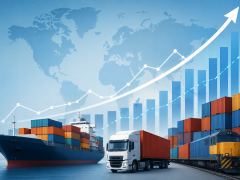
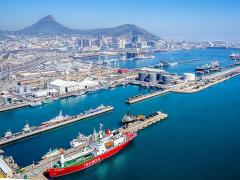
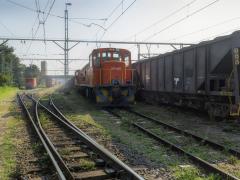
DHL Global Forwarding has embarked on an aggressive drive to grow its multimodal logistics solutions into Africa. “At DHL it is all about solution-based marketing,” says head of airfreight, Bradley Francis. “Most of our customers are trying to grow their Africa businesses and we believe we can provide a strategy to suit any customer, often providing significant cost savings through smart logistics,” he told FTW. “A customer who needs to move goods into southern Africa may traditionally have gone the direct airfreight route which is incredibly expensive because of the capacity constraints. By contrast the shipment can be consolidated in Johannesburg and moved to southern Africa by road at a quarter of the price. “We have also been very successful in being able to remove the 1-ton minimum weight on our multimodal cargo,” he said. “The weight on the air waybill is therefore the weight that is transferred onto the trucking becauseDHL maintains control of the cargo all the way. Roadfreight traditionally used a 1:2 ratio when calculating volumetric weight. In airfreight, for example, the volume factor is calculated using the 1:6000 ratio. Those are the kinds of substantial savings that we’re passing on,” said Francis. “In addition we have managed to reduce the minimum weight for the air-road product from the traditional 1 CMB/ 1 ton to 100 kg for roadfreight due to the improved volume mix of cargo through consolidation,” he said. The company offers an FTL and LTL service as well as f lash deliveries. “We can tailor a service to meet the urgency of any shipment,” Francis added. He says there’s been significant growth in DHL’s Africa business over the past year, from mining and minerals and projectbased cargo to power generation, perishables and FMCG. And while there are many challenges in Africa that are beyond the control of logistics operators – like poor infrastructure and issues like the Ebola outbreak which shut off certain routes – there are others like customs delays that can be mitigated. “Every cross-border movement involves two clearances,” says Francis. “We have control on both sides of the border and our internal communication speeds up the process. With more than 42 000 customs experts worldwide there’s a vast level of expertise at our customers’ disposal. Our understanding of local customs requirements helps drive the knowledge further into our business and to our customers through on-going customer training events.” Francis is upbeat about growth for the year ahead and volume drives on particular lanes, which have achieved significant success up to now, are part of the plan going forward. INSERT & CAPTION We have control on both sides of the border and our internal communication speeds up the process. – Bradley Francis
Multimodal solution cuts costs for cargo into Africa
Comments | 0
© Now Media. This content is protected by copyright and may not be adapted or republished. If you would like to discuss cooperation opportunities, please contact: editor@freightnews.co.za.