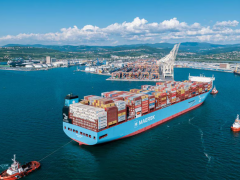
Growing demand in the international relocations sector has necessitated shifting from less-than-container (LCL) shipments to booking their own groupage boxes, freight forwarder Sterdts says.
The company’s owner, Gert Mostert, says relocations are where Sterdts started, and although the 10-year-old business has rapidly expanded into commercial forwarding, it remains close to its roots.
Knowing its clientele in this part of its service offering is also why Sterdts eventually moved into groupage, to drive costs down and enhance cargo care.
“We used to do LCL, but as we grew and demand increased we saw that volume justified using our own containers,” he says.
Admittedly, it often takes longer to fill a box, but consolidating with other consignors through space-sharing services means shippers wait less time and pay reduced rates for relocating household items and personal goods.
“We’ve worked with NVOCCs (non-vessel owning common carriers), and their core focus is commercial freight via LCL shipments. Cargo is palletised and crated, which drives up costs.
“Because the market has become price sensitive, we try to accommodate clients as much as possible. We also know that we work with people’s private belongings, so we treat personal cargo with the necessary care.”
It’s also why Sterdts is careful who it works with.
“Not everyone in the relocations business is willing to do consignor consolidation, but we rely on trustworthy partners to cut down on waiting time for groupage boxes.”
Mostert says the relocations market has eased back amid economic pressures – not least of which is the full emigration trend, often forming part of the so-called “Homecoming Revolution” when people return.
“To Australia or New Zealand, that means R400 000 one way once you tally agencies, visas, flights and shipping. Many ex-pats return after a couple of months, roughly doubling cost. Groupage slashes the shipping price vs LCL, even when cargo is shared.”
Basically, groupage is often cheaper and kinder to household goods, Mostert says.
Apart from also handling relocations to the UK, Sterdts does a lot of business to the Netherlands.
So, as opposed to moving cargo to the UK and EU at the same time, the company bypasses the UK entirely on behalf of its European clients.
“Because the UK has left the EU, it makes sense to work directly with our agent at the Port of Rotterdam, from where cargo is consolidated into the rest of Europe.”