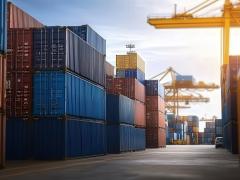
Mauritius is leveraging its geographic position to develop its logistics sector, which includes value-added logistics. The plans and budget were outlined by vice prime minister and minister of finance and economic development Xavier Luc Duval in his 2014 budget speech, which was delivered in November 2013. “We are developing a new architecture that will change the course of our history and transform Mauritius from a country always looking for opportunities to a land of opportunity. One of the pillars of economic development is what the island has termed its “Ocean Economy”. “Our marine territory has enormous potential. The Mauritius Maritime Zone is 2.3 million square kilometres – around the size of Western Europe. “There are opportunities that can be seized in a number of clusters, including petroleum and mineral exploration, seafood and aquaculture, deep ocean water applications (DOWA), marine renewable energies and ocean knowledge,” he said. In line with this vision, “the next big investment to improve connectivity will be in the sea port. We have compelling reasons to make strategic investments in our port given the central role that it will play in the Ocean Economy." Investment in marine services and petroleum hubs are also planned, with opportunities being created for the private sector. The marine services hub “will be centred on growing the bunkering facilities and the various economic activities that are linked to that trade, such as ship chandling, repairs and maintenance of vessels, crew management and ship leasing. “The demand for bunkering in the region is expected to rise to around 8.6 million tonnes." Currently, the country attracts bunkering traffic for only 300 000 tonnes and the aim is to triple that in the medium term. “We are impressed by the keen interest of international companies to invest in bunkering and oil storage." To make it happen, he said, the country is liberalising the bunker trade which will bring a fall in the price of bunker fuel. “The liberalisation of bunkering will increase the number of ships calling at Port Louis leading to greater transhipment and the growth of feeder services to Africa, resulting in more competitive tariffs. “It will also bring about substantial investment in facilities, in and around the port." He believes the liberalisation of bunkering will give rise to additional private investment of Rs2.5 billion (R900 million) and increase storage capacity from 120 000 to 270 000 tonnes by 2016. This investment will fuel the development of a petroleum hub. Work has already started on the construction of storage facilities for automotive fuel and gas oil of a capacity of 25 000 metric tonnes for re-export to the region. “But we want to go beyond that and probe into the feasibility of creating a fully fledged petroleum terminal in Mauritius,” he said. To this end an exhaustive study will be done on all the aspects of such a project, with great emphasis on environmental protection. INSERT We have compelling reasons to make strategic investments in our port given the central role that it will play in the Ocean Economy. CAPTION FTW's Jodi Haigh and Ed Richardson sample the local fare during their recent trip to Mauritius.
Mauritian government has logistics focus
Comments | 0
© Now Media. This content is protected by copyright and may not be adapted or republished. If you would like to discuss cooperation opportunities, please contact: editor@freightnews.co.za.