In a bid to address the country’s skills deficit, Imperial Logistics is extending the reach of its graduate development programme and partnering with local government and Teta (Transport Education Training Authority) in new workplace experience programmes.
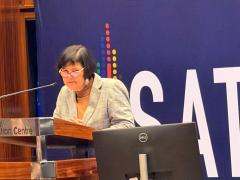
Training and development executive Colette Wessels explains that the group’s graduate development programme previously focused on honours and degree students from traditional universities, and was primarily pitched at a junior management level. “We realised, however, that we were missing the opportunity to reach another group of individuals who can add great value to our company, and whose training and development can help to address the country’s critical skills gap.”
By partnering with the Universities of Technology and FET Colleges, Imperial is reaching graduates who may have a non-degree qualification, but who can fill important operational positions across a range of levels in the organisation, she added. “Our aim is to upskill these graduates though our programmes and learnerships, in order to prepare them for roles across our environment and industry, and enable Imperial and the industry as a whole to reap the benefits.”
Imperial’s graduate development programme provides graduates with relevant on-the-job experience and exposure through job rotation, work assignments and special projects. Opportunities are offered to graduates in disciplines that include logistics and supply chain, industrial engineering, IT, human resources and CIMA (Chartered Institute of Management Accountants). As a CIMA accredited partner, Imperial is able to offer training to CIMA students.
In addition to extending its graduate development programme, the Imperial Logistics Academy – the group’s dedicated training facility – has also entered into partnerships with the Ekurhuleni Metropolitan Municipality and Teta (Transport Education Training Authority) that have this year provided internship opportunities for 143 young South Africans.
The company’s bursary programme is also helping to address the skills shortage. It is offered to second year students who are excelling academically. In 2014, Imperial had 15 bursars, and of these, eight have now been employed in the group and the remainder are continuing their studies, says Wessels.
Logistics major tackles skills development head on
Comments | 0
© Now Media. This content is protected by copyright and may not be adapted or republished. If you would like to discuss cooperation opportunities, please contact: editor@freightnews.co.za.