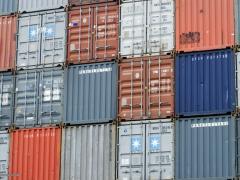
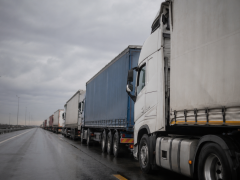
‘Ignorant’ transporter likely to escape maximum penalty Alan Peat CONTAINER HAULIERS charged with overloading should not blame the shipping line for incorrect mass declarations, according to Quintus van der Merwe, trade and transport specialist at Durban-based lawyers, Shepstone & Wylie. “Although the information regarding the substantial overloading of a Tristar vehicle by some 29 tonnes is scant and hearsay (FTW January 31, 2003),” he said, “there are a number of points worth noting.” The shipping line has been unfairly criticised. “It, in fact, is in the identical position to the road transporter in that it relies on a declaration as to the weight of a container by the shipper.” But there is a motivation for shippers to under-declare, he added. “It is common practice for the shipping line to quote a box rate subject to a maximum. “In other words, if the shipper had declared the true weight, the shipping line would more than likely have charged a surcharge.” Van der Merwe also points to another reason why shipping lines can be excused from blame in mass misdeclarations. “Containers are designed to carry a certain weight,” he said. “It seems quite likely the contents exceeded the permissible weight of the containers. This in turn placed the shipping line at risk.” Looking at the basic law surrounding the issue of vehicle overloading, and the circumstances of this particular case, Van der Merwe sees some hope for the unlucky road haulier. According to his research, it is a contravention to overload in terms of section 89 of the National Road Traffic Act No. 93 of 1996 (“the Act”) - read together with Chapter IV of the Regulations to the Act. “If the transporter is charged for overloading and is subsequently found guilty,” said Van der Merwe, “then the presiding magistrate has a discretion when sentencing. “It is unlikely that - in circumstances when the Act was not knowingly or intentionally contravened - the magistrate would impose the maximum penalty.” It is even possible that Tristar, if charged, could successfully defend the matter, Van der Merwe told FTW. “This,” he said, “on the basis that the Act does not impose strict liability. “In other words, the State would at the very least have to prove that Tristar was negligent.” As to why the shipper should under-declare his container mass, Van der Merwe offers the following scenario. “If the weight of the contents of the container were deliberately under-declared by the shipper, it is possible that he did so to avoid payment of Customs duties, road freight or sea freight.” However, Van der Merwe added, in the absence of knowledge of the shipment, “this remains speculation.” Meantime, maritime legal specialist Tony Norton of Garlicke & Bousefield, suggested one means for honest road hauliers to save themselves from being financially hit by the dishonesty or error of others. Road hauliers should arrange their contracts in such a way that they can recover fines for such overloading incidents where the container mass has been under-declared by another party in the logistics chain. “You must structure your financial obligations so that you can pass the fine up the line to the shipping line, or the shipper,” he said. Apart from that, he added, the point that must be kept in mind is that, legally, “ignorance is no excuse”.
Legal eagles dissect liability issue in overloading cases
Comments | 0
© Now Media. This content is protected by copyright and may not be adapted or republished. If you would like to discuss cooperation opportunities, please contact: editor@freightnews.co.za.