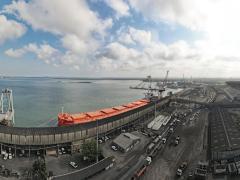
According to the International Chamber of Commerce (ICC) the fourth of the Incoterms – Carriage and Insurance Paid To (CIP), at a named place of destination, means that “the seller delivers the goods to the carrier or another person nominated by the seller at an agreed place (if any such place is agreed by the parties) and that the seller must contract for and pay the costs of carriage necessary to bring the goods to the named place of destination”. The ICC’s Incoterms ®2010 identifies ten obligations that the seller may need to fulfil in terms of Ex Works: (1) general obligations of the seller; (2) licences, authorisations, security clearances and other formalities; (3) contract of carriage and insurance; (4) delivery; (5) transfer of risks; (6) allocation of costs; (7) notices to the buyer; (8) delivery document; (9) checking – packaging – marking; and (10) assistance with information and related costs. The general obligations of the seller are essentially the provision of goods in conformity with the contract, which implies that the documents stipulated in the contract of sale must be provided. In respect of the licences, authorisations, security clearances and formalities, the seller must obtain these at his own risk and expense, and also needs to account for all export (customs) formalities. The seller must contract or procure the contract of carriage of the goods. Such contract must be from the agreed point of delivery. The seller must, at his own expense, arrange cargo insurance. With respect to such insurance, you should consult the ICC literature in this regard. As for the delivery to be effected, the seller has to deliver the goods by handing them over to the carrier, as per the specification of the contract of sale. Once the goods have been delivered then all risks are transferred from the seller to the buyer. As for the allocation of costs, the seller must pay all costs until the goods have been delivered. Effectively all costs are in accordance with the contract of carriage. The seller must give notice to the buyer of the delivery of the goods. The seller must provide the buyer with the usual transport documents. With respect to the checking, packaging and marking, the seller must pay those costs that are necessary for the purpose of the delivery of the goods. As for the assistance with information (including security-related information) and related costs, the buyer could request this from the seller, but this would be for the buyer’s account. In next week’s issue we will define Carriage and Insurance Paid To (CIP) – The Buyer’s Obligations.
Learning more about Incoterms®2010
Comments | 0
© Now Media. This content is protected by copyright and may not be adapted or republished. If you would like to discuss cooperation opportunities, please contact: editor@freightnews.co.za.