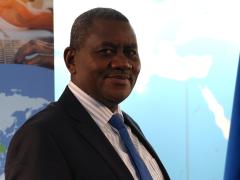
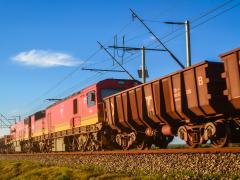
Rail infrastructure projects across southern Africa are frequently delayed, not because of a lack of capital, political support or even technical expertise, but because there is no dedicated process to drive implementation from concept to execution, according to Dr Maximilian Matschke, managing partner at Anura Partners. Speaking at the Zambia Land-Linked Conference earlier this year, Matschke said that many corridor projects already had feasibility studies, funding institutions, contractors and political backing in place, yet remained stalled because no one was responsible for coordinating the various stakeholders and managing the process from start to finish. “Think of it like puzzle pieces on a table,” he said. “The picture on the box is clear, but what is missing is someone to assemble it. In the rail space, no one owns that assembly process and so the pieces remain scattered and the picture unfinished.” Successful rail corridor development required a structured process, he said. “That starts with convening the right people, identifying all the stakeholders and bringing them together around the same table,” he told delegates. “It means securing formal commitments through written agreements. There needs to be an alignment instrument, even if it is only a one-pager of intent to collaborate, signed by all parties with resources committed to the project.” Another critical element often missing from rail corridor projects was the identification of what Matschke described as “fatal gaps”. “You have to understand where the critical gaps are and recognise that not all obstacles carry the same weight. It means addressing misconceptions and building a solid fact base to determine which solutions are the most economically viable. Rail projects in southern Africa are not short of visionaries, but rather the coordination capacity that drives change and the process.” He said cross-border rail corridors also required a dedicated coordination function focused on accelerating implementation and maintaining momentum. “It is not about whether we can afford it,” he said. “Rail corridors are among the most durable infrastructure legacies a country can create. They serve generations, deliver significant economic multipliers and have an impact that is unmatched by almost any other government intervention.” Leaders who successfully delivered rail corridors would be remembered for unlocking trade, investment and long-term economic growth. “The freight is there. The opportunity is there. What is needed is a process that brings the pieces together and keeps them moving forward.” LV
Lack of coordination hampers rail projects
Comments | 0
© Now Media. This content is protected by copyright and may not be adapted or republished. If you would like to discuss cooperation opportunities, please contact: editor@freightnews.co.za.