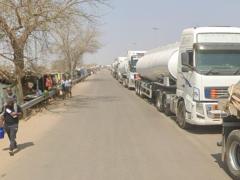
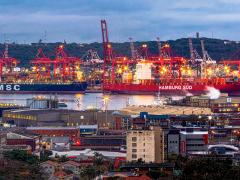
The transport industry has come up with three “big ideas” to reduce regional trade barriers and open up new markets in sub-Saharan Africa. They include high-level government intervention, a reduction in red tape, and an effective, integrated rail system that would reduce port and road congestion. Trade barriers are often very contextual, said South African Association of Freight Forwarders (Saaff ) executive member, Philip Wyllie, one of several participants in a roundtable discussion on the topic at the recent 2014 African Transport and Infrastructure Show held in Sandton. “For example Ghana, in recognising that the country needs transport infrastructure to facilitate trade, has introduced additional levies to fund the necessary developments. But the fees are expensive and will also impede trade,” he said. Furthermore, transporters often have to build in all sorts of unknowns along their journey, with fees, levies and other changes occurring often without prior notice. Zambia’s minister of Transport, Works Supply and Communications agreed that barriers to entry across the region were all different and were often not well communicated. He suggested that industry stakeholders lobby for common regional legislation and intraregional cooperation. Dialogue plays an important role, according John Omingo, head of commercial shipping at Kenya Maritime Authority (KMA). The presidents of Kenya, Uganda and Rwanda meet every two months to discuss barriers to trade, training needs and capacity building in order to find joint solutions to these regional challenges. “These solutions are then issued as high-level instructions to industry stakeholders such as ports or rail authorities and parameters and timelines are set,” he said. Solutions are clearly critical. Saaff vice chairman Mike Walwyn pointed out that red tape and the delays it causes were becoming a “serious obstacle” to national and regional trade. He suggested that innovative and creative ways be found to sidestep bureaucracy and cut down on red tape, pointing to the Western Cape government’s Red Tape Hotline initiative by the Red Tape Reduction Transversal Workgroup (RTRTWG) as a prime example of innovative thinking. A seamless system of freight transport leaving and arriving at ports to avoid the major delays caused by vehicle congestion is vital to reducing transport costs and removing trade barriers, said Walwyn. “Currently there are around 5 000 vehicles entering and departing the port of Durban per day. Projections are that this will climb to 17 000 per day in five to 10 years.” He suggested that an efficient, integrated rail system was the answer to this challenge. Top trade barriers 1. Bureaucracy and red tape 2. Lack of infrastructure – particularly inland ports and harbours, including dry ports 3. Fees and levies 4. Lack of common regional legislation and integration 5. Lack of funding for rail and port equipment and infrastructure
Industry tables three 'big ideas' to remove trade barriers
Comments | 0
© Now Media. This content is protected by copyright and may not be adapted or republished. If you would like to discuss cooperation opportunities, please contact: editor@freightnews.co.za.