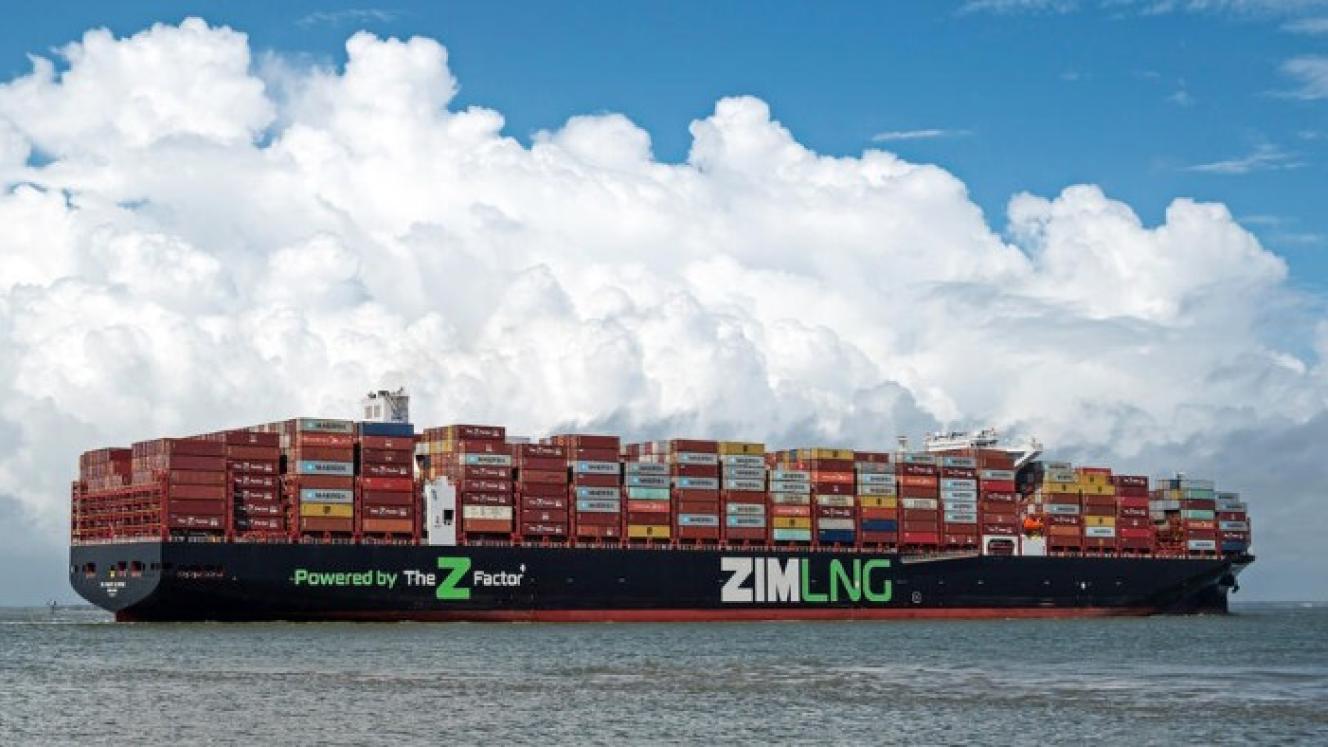
The past week has been full of daily developments for Hamburg-based line Hapag-Lloyd and its new Haifa-headquartered acquisition, ZIM Integrated Shipping Services.
Bought for $4.2 billion, it has emerged that the purchase of the 117-vessel Israeli carrier, whose capacity is estimated to be 713 000 TEU, includes the services of Gold Star Line.
Adding interest to the acquisition is the fraught background against which it’s playing out: the resumption of short-sea voyages through the Suez by Gemini Cooperation, comprising Maersk and Hapag-Lloyd, as opposed to sailing around the Cape of Good Hope, and the current military standoff between the US and Iran.
The Trump Administration has given Tehran 10-15 days to reach a diplomatic agreement on long-standing issues, such as uranium enrichment for nuclear armaments, or risk military action.
If that happens, it’s very likely that the current truce in the Red Sea could be compromised, potentially leading to Houthi rebels resuming their violent disruption of maritime traffic south of the Suez.
As tension in the Middle East plays out, about 800 unionised members of ZIM’s 1 000-strong staff complement are poised to go on strike, while the Israeli government decides whether or not to proceed with the sale of its national container line.
The inclusion of Gold Star Line is interesting in that it will afford Hapag-Lloyd vessel access to the intra-Asian market, where the line operates routes between China, South Korea, Indonesia, Thailand, Vietnam and the Philippines, having a fleet of 23 box ships with capacity for 1 700 to 7 800 TEU.
At this stage, Hapag-Lloyd relies on its Gemini partner to do intra-Asian shipping, which various sea intelligence platforms measured at about 40% of global cargo in 2025.
Although transpacific cargo is running low volumes at the moment, Linerlytica reported earlier this week that ZIM’s acquisition would give Hapag-Lloyd 22% market share on Asia-Americas ocean freight, surpassing Cosco and OOCL’s market dominance of 15% on transpacific cargo.
Whereas Hapag-Lloyd currently has 8% market share of container freight between Asia and the US, ZIM deploys 54% of its overall capacity on the Far East-North America trade lane.