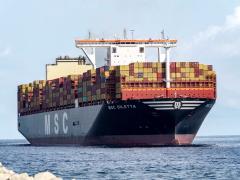
The Walvis Bay Corridor Group (WBCG) network has surpassed 2.4 million tonnes of cargo, reflecting growing confidence in Namibia’s logistics offering and increasing regional and international trade flows. According to the WBCG’s acting chief executive officer, Edward Shivute, this milestone highlights the continued growth of Namibia’s corridor network as the country positions itself as a regional logistics hub. He said efforts to strengthen Namibia’s position as a leading logistics gateway for the region were gaining momentum, with rising cargo volumes reflecting increased market confidence in the country’s trade and transport corridors. “We are working closely with both public and private sector stakeholders to improve corridor efficiency, reduce the cost of doing business and enhance supply chain predictability,” he told Freight News. Recent engagements between the WBCG and the Namibia Revenue Agency (NamRA) on the draft Customs Bonds Management Policy and other regulatory frameworks have created an important platform for constructive consultation between industry and the revenue agency. Shivute said collaborative engagements with NamRA, supported by the Namibian Ports Authority (Namport), had also contributed to resolving operational bottlenecks related to the handling of unmanufactured tobacco, enabling trial shipments and facilitating smoother cargo flows through Namibia’s ports and corridor network. He said the WBCG had also played an important coordinating role in addressing non-tariff barriers affecting in-transit cargo. Through engagements with the Ministry of Agriculture, Fisheries, Water and Land Reform, restrictions on frozen chicken and related products were revised from blanket bans to targeted risk-based controls, while restrictions affecting in-transit fertiliser cargo were removed to support uninterrupted regional trade flows. “Collectively, these initiatives continue to reinforce Namibia’s reputation as a responsive, efficient and trade-friendly logistics environment, while strengthening the competitiveness, safety and reliability of the WBC within the regional supply chain,” said Shivute. He said continuous coordination among multiple authorities and jurisdictions remained critical for cross-border trade. “In response, Namibia has made significant progress in modernising border operations and improving trade facilitation mechanisms aimed at reducing transit times and improving supply chain predictability.” Major border posts – including Trans-Kalahari, Katima Mulilo, Noordoewer and Oshikango – are now operating on a 24-hour basis, significantly improving cargo movement and reducing delays. In May this year, Namibia – through NamRA – implemented the upgraded ASYCUDAWorld 4.4.1 web-based customs system to strengthen customs modernisation, cargo clearance efficiency and digital trade processes. In addition, 24-hour weighbridge operations at key logistics nodes now support uninterrupted cargo flows while maintaining road infrastructure protection and compliance. A key milestone has been the operationalisation of the One- Stop Border Post (OSBP) on the Trans-Kalahari Corridor between Namibia and Botswana, while plans to implement a similar border post at Katima Mulilo, between Namibia and Zambia, are now at an advanced stage. These initiatives are expected to significantly streamline customs and immigration processes, reduce border delays and improve regional trade efficiency. Shivute said investment in transport and logistics infrastructure was also continuing. The Port of Walvis Bay has seen upgrades, including a major dredging and port expansion project that deepened the 10km access channel from 14.4 metres to 16.8m and widened it from 130m to 200m, significantly improving the port’s ability to accommodate larger vessels and support growing trade volumes. At the same time, the Port of Lüderitz continues to gain strategic importance, particularly in supporting manganese exports and in future developments linked to the oil, gas and green hydrogen sectors. The planned development of the Angra Point Deepwater Port further demonstrates Namibia’s long-term commitment to supporting industrial expansion, energy-related investments and emerging industries. Shivute said strategic regional infrastructure initiatives such as the Trans-Zambezi Railway and Trans-Kalahari Railway projects were also being prioritised. LV
Growth of corridors increases trade flows
Comments | 0
© Now Media. This content is protected by copyright and may not be adapted or republished. If you would like to discuss cooperation opportunities, please contact: editor@freightnews.co.za.