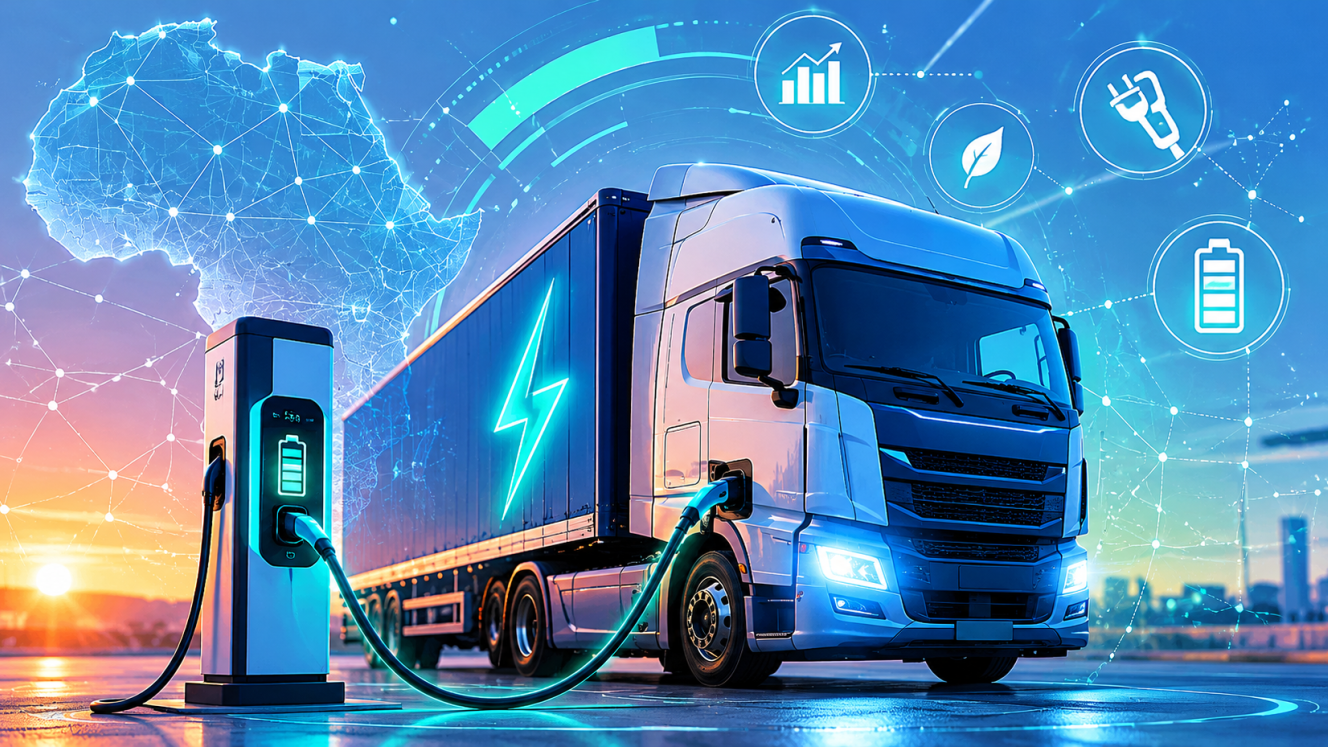
The transition to electric vehicle (EV) technology in South Africa’s long-haul trucking sector is no longer a distant projection but a reality arriving within the next five years.
Speaking at the Road Freight Association (RFA) 2026 convention, which took place in Zimbali at the weekend, Green Transport Panel chairperson, Liesl De Wet, said the transition required an immediate overhaul of facility infrastructure, charging capabilities and operational skill sets.
“Right now, inaction is the highest risk strategy we can deploy,” De Wet told delegates.
Global compliance requirements – especially strict European Scope 3 supply-chain reporting regimes – were compelling domestic transport operators to provide low-carbon alternatives. Transporters needed to implement data platforms to track and understand the level of their businesses’ CO₂ emissions, she said.
She advised transport operators to use real-time vehicular telematics to move beyond a simple “compliance tick box space” and make data actively add value to business operations.
Alternative power solutions like hydrogen fuel cells were “peeking around the corner”, but mainstream commercial viability was anticipated only between 2032 and 2036, said De Wet.
Meanwhile, zero-emission EV technology is already establishing dominance. “EV is definitely dominating. We’re seeing it more and more in the short- and medium-haul delivery space. The long-haul truck space is definitely on its way. It’s closer than you think. It’s moving at a rapid rate,” De Wet said.
“There are a lot of things that need to be taken into consideration, such as what skills are required and the infrastructure needed for charging stations. Charging stations are critical in this space, so we’re not only looking at the vehicle but also at your facility.”
Several hurdles remain for the transition to EVs in long-haul transport. These include energy security and depot readiness, high upfront commercialisation costs and more complex operational requirements. Fleets will need efficient facilities before installing solar panels and EV charging stations while routing will have to account for charging times, battery range and depot power constraints. Driver behaviour and mechanical training will also need to evolve, because EVs have higher torque and different maintenance requirements.
De Wet added that solutions were emerging to assist operators, including an upcoming EV skills course framework engineered by Stellenbosch University and the Transport Education and Training Authority (Teta), as well as localised battery recycling and repurposing initiatives to handle end-of-life environmental concerns.
“There is no silver bullet,” De Wet said, pointing out that a combination of technologies would define transition strategies.