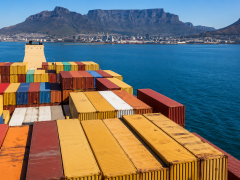
Africa’s logistics evolution isn’t waiting at the border for a stamp, and neither is Easy Clear. In a trade environment where paperwork still tries to outrun progress, the tech- driven provider is turning data into momentum, streamlining customs processes and keeping cargo moving across the region. General manager Michael Henning says the approach is simple: adapt fast, solve smart and stay connected across borders – literally. “On a continent with many challenges, strategy starts with resilience – it really is a case of adapt or die,” said Henning. “As a business operating in this environment, we have learnt that finding lasting solutions to complex problems is part of daily life. You have to be willing to take risks.” According to Henning, the company’s focus remains firmly on finding new and innovative ways to drive efficiency and support seamless trade. “We’ve integrated solutions for our neighbouring BLNE countries, enabling direct data transfer and reducing the need for duplicate entry into systems such as Asyworld and BURS,” he said. “Our SaaS model ensures business continuity and mobility, while our online purchase order module enables real-time communication between overseas agents, local forwarders and consignees. It’s all about keeping the flow of information – and therefore cargo – as smooth as possible.” With this in mind, it comes as no surprise that digitalisation and border modernisation are emerging as key trends across the continent. “It is also hugely encouraging to see the shift and investment in South Africa’s port infrastructure, particularly in Cape Town, which is already delivering improved volumes and faster turnaround times,” said Henning. Yet, even as progress gathers momentum, challenges remain. Infrastructure and transport networks – along with persistent regulatory and cross-border barriers – continue to be the biggest constraints affecting logistics supply chains across the continent. “Ports and road infrastructure development remain fundamental to regional trade and economic growth across Africa,” he said. “Ports are the primary entry and exit points for cargo, and road networks form the backbone of many transport corridors, particularly in landlocked countries and in markets like South Africa, where rail support is limited. Strengthening these routes is essential to unlocking trade.” He stressed that infrastructure upgrades must be supported by smarter borders. “Border modernisation cannot be overlooked. Efficient, harmonised and integrated border processes are critical to enabling regional trade and ensuring that infrastructure investment delivers real value. When you combine that with digital platforms – such as our SaaS solution, which enables electronic customs clearance and cargo tracking – you have the recipe for sustainable regional and intra-African trade.” Henning believes the continent is well positioned for continued growth, though the pace and trajectory vary by region. “Geography plays a significant role,” he said. “In North Africa, countries such as Morocco and Egypt are strategically positioned as natural gateways to Europe, supported by advanced port and logistics infrastructure. In West Africa, major investment in the Port of Abidjan is strengthening Côte d’Ivoire’s position as an emerging regional hub. Meanwhile, in East Africa, the expansion of the Addis Ababa– Djibouti railway is cutting transit times and meaningfully boosting Ethiopia’s logistics capabilities.”
Finding lasting solutions to complex problems
Comments | 0
© Now Media. This content is protected by copyright and may not be adapted or republished. If you would like to discuss cooperation opportunities, please contact: editor@freightnews.co.za.