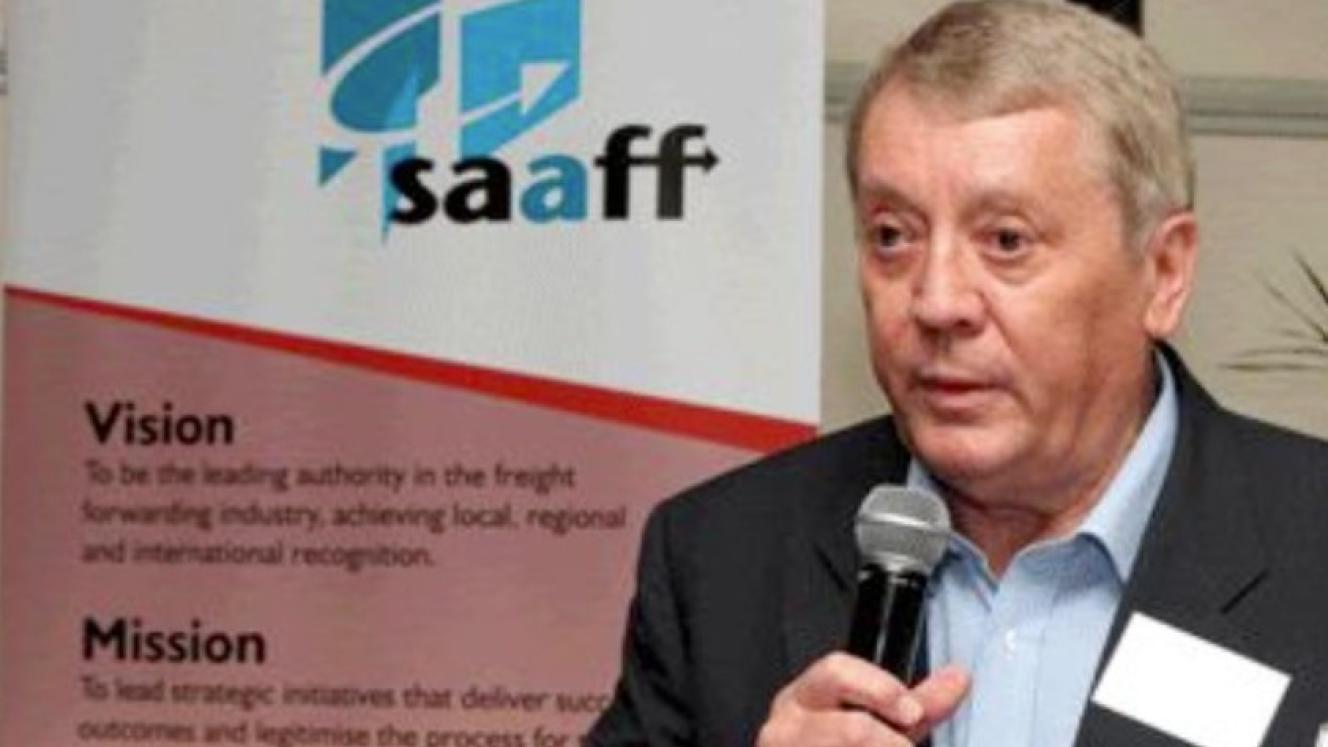
Structural changes at the South African Association of Freight Forwarders (Saaff) make no sense if measured against some of the justifications cited for the latest spate of developments, former CEO Dave Logan has said.
Speaking to Freight News after it emerged that Saaff was on a centralisation drive to locate regional control at head office in Johannesburg as opposed to Cape Town, Durban and Gqberha, Logan said he didn’t understand what his successor was trying to do.
The current CEO, Dr Juanita Maree, claims that closing down the Executive Committees (Exco) representing the various regional chapters is necessary against the larger backdrop of Saaff and its representation on the National Logistics Crisis Committee (NLCC).
But Logan contends that Saaff has always been there for its members and that the best way to do this is to be immediately available – not at a remove away from the ports in Gauteng.
This comment has been echoed by various Exco members who freely assisted with freight issues at regional level, many of whom now say they have been unceremoniously dumped.
Logan says that when he was Saaff CEO, a lot of effort and planning went into setting up regional representation to immediately address problems when they arose, on the ground by people who best understood the ports they were dealing with.
“The board wasn’t involved. I got instructed to employ people to do the work because board members just didn’t have the time to do any of the things that we needed to do.”
To now learn that chapter-related issues must in future apparently be referred to Johannesburg seems like a very cumbersome way of problem solving, Logan says.
“I just don’t comprehend what she (Maree) is trying to do.
“I know that there are a lot of unhappy members down at the coast since they were told that the Excos are being disbanded.”
Commenting on Saaff’s centralisation drive, Logan was to the point – “I don’t think it’s going to work.”
He added that he had seen correspondence sent out by Maree on February 17, elaborating on Saaff’s “next phase of institutional maturity”, especially in light of transitioning from a Non-Profit Organisation to a Non-Profit Company.
However, he stressed that “it still doesn’t make logical sense” why, when you have professionals skilled by years of experience pertaining to Durban and Cape Town, Saaff would think it’s necessary to change that.
“I just don’t know what the logic is,” Logan said.
He added that Maree’s work at the NLCC and its impact on improving the country’s ports, which have shown a lot of operational progress, deserved acknowledgement.
But Logan has his reservations about how this is influencing Maree’s decision making on behalf of Saaff’s members.
“Yes, you can engage with government, but you don’t have to put on a political hat.”
Maree claims that to better represent forwarders and advance the country’s logistical and supply chain industry, it’s important to tighten up on feedback received from the regions.
Last week a past argument was again raised, that the regions have not been as forthcoming with information as they could have been.
Logan says this is not the case.
“I used to get all the minutes of all the meetings from the regions, such as with Sars Customs, and I think that has been canned now.”
This has been confirmed by more than one Saaff member in Durban and Cape Town, that regular meetings over customs-related matters have been cancelled because of the dissolution of the Excos.
Whereas shippers and agents could previously troubleshoot such problems with local representatives from the SA Revenue Service, Logan says he can’t see how this is going to be possible now that the chapters have been stripped of executive power.
Maree says it shouldn’t be that Saaff and Sars call meetings with one another at regional level to solve customs issues, and that these matters deserve centralised resolution.
She added that it wasn’t accepted practice for Saaff or Sars to call meetings with one another.
But Jonathan McDonald, former vice-chairman of the now-dissolved Cape Town Exco, has said it’s been part of the process all along to have monthly meetings involving customs.
Logan says the same.
He explains that when he was still with Saaff at head office, he would regularly attend meetings with Sars down at ports such as Durban, and that there are minutes for these meetings.
McDonald says he can retrieve calendar notifications from the past 20 years or more, proving that regular meetings with Sars were common practice.
Logan, McDonald, some members of Saaff and Sars staff working with customs have been asking why the meetings they used to have are now cancelled.
Logan also questioned the new four-tier membership system that has been introduced.
In the February 17 letter sent out to members, it’s explained as follows:
- Platinum: A seat at the table – be in the room where policies and regulatory changes are discussed.
- Gold: Project participation – play an active role and lead reform projects with Saaff, the industry and government as applicable.
- Silver: Working group – participate in working groups and drive the key deliverables of the design project.
- Bronze: Sharing of information and networking – be part of the association and benefit in the sharing of insights, crisis communication and information.
Logan says it seems the new membership fee structure is based on exclusivity, and not on company size as was the case prior to the new structural changes.
He said this could potentially impact small, micro and medium enterprise members who can’t afford stiff membership fees.
He says whereas all issues by all members were previously treated equally, this seems to be no longer the case.
What’s currently happening at the association he headed up for more than 11 years seems to be against the spirit of Saaff, Logan says.
“I don’t know what’s going to happen, but we’ll see. I think that a lot of memberships will be cancelled.”