The Port of Durban has seen an
increase in its dry dock order
book following the opening of the
facility in February, according to
Transnet spokesman Mboniso
Sigonyela.
The 349m-long/33.5m-wide dry
dock, is able to accommodate three
vessels at a time compared to just
one when the caisson was out of
commission.
“The current rand dollar exchange
rate is playing in our favour as we
charge our fees in rands; therefore it
is more lucrative to bring vessels to
SA at the moment,” he said.
“We envisage a marked upward
trend in the short term and with
plans both in the private and public
sector to increase the floating dock
capacity in the Port of Durban
by 300% – from one operational
floating dock to four floating docks
– the capacity will generate a much
higher work load,” he said.
“We expect this to almost triple
the number of vessels being serviced
in Durban. Our competitive
advantage in general is geographical
location and the exchange rate.
Our prices are cheaper than in
Europe and the US, as well as
the operational efficiency and
effectiveness of the new equipment
we are purchasing for the dry dock
complex.”
Sigonyela said Transnet was also
currently working on feasibility
studies for bulk road services within
the port.
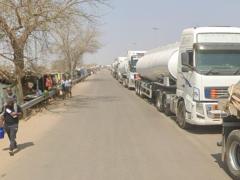
“This covers widening Bayhead
road, link roads to the M7
(Ewin Swales), the proposed
de-proclamation of Maydon Road
and various permutations on how to
handle traffic within the port area.”
He added that Transnet was
working on a major joint study with
eThekwini Municipality focusing
on road traffic as far south as
Amanzimtoti, to Blue Lagoon in
the north and the N2 freeway in the
west.
“This study will allow Transnet
together with the city to understand
the traffic patterns and make future
plans,” he said.
CAPTION
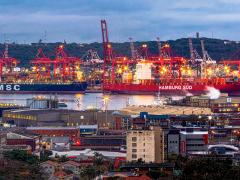
The Durban dry dock with the repaired outer caisson in position.
Exchange rate favours dry dock business growth
Comments | 0
© Now Media. This content is protected by copyright and may not be adapted or republished. If you would like to discuss cooperation opportunities, please contact: editor@freightnews.co.za.