Botswana’s 36 200-sqm
dry port in Namibia is
being hailed as a major
development for the small
landlocked country.
Intended to serve as a platform
for goods moved between Botswana
and its regional and international
trade partners, the dry port will be
operated by Sea Rail, a subsidiary
established in 2013 in Namibia and
owned by Botswana Railways.
Botswana freight experts see
this move as a major breakthrough
for the country which is currently
reliant on South African ports for its
imports and exports.
“The synergy and collaboration
with Namibia makes sense,” a source
told FTW. “We cannot continue the
way we are. Our beef is moved on
reefers to Cape Town. Logistically
speaking it does not make sense and
it adds cost to products in the final
market for which they are destined.
Moving it through our own dry port
in Walvis Bay is a far better option.”
There is agreement on various
fronts that the country has an overreliance
on South Africa – from
providing water to its biggest cities
to the movement of most of its
goods.
Through Sea Rail the government
intends to consolidate its maritime
goods using intermodal transport
solutions to final delivery points.
In this regard the much-awaited
Trans-Kalahari railway line will
play an integral role. Whilst
funding for the railway line is yet
to be secured, both the Namibian
and Botswanan governments have
stressed the importance of such a
railway line and the necessity for its
development.
“The dry port is a very real
attempt by the Botswana
government to develop its logistics
and transport sectors,” said the
source. “The biggest challenge
for this country is that we are
landlocked and developing more
footprints is essential. We cannot
just have a South African solution
– so as much as we are opening up
this opportunity to Namibia, there
is a definite need to take that further
and open up towards Zimbabwe,
Mozambique and even the DRC.”
With the dry port being
operational since September last
year expectations are that more
and more Botswana freight will be
routed through Walvis Bay.
“There is political will and
appetite for a stronger connection
with Namibia. The dry port proves
that,” said the source. “Through this
facility exporters and importers
are given an opportunity to move
their cargo differently. It’s further
enhanced by the fact that Namibia
and Botswana have streamlined
their borderpost formalities and
procedures and so one is looking at
an efficient way of moving cargo,
possibly even more cost- effectively.”
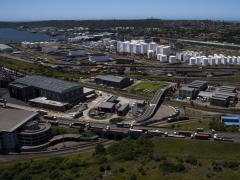
CAPTION
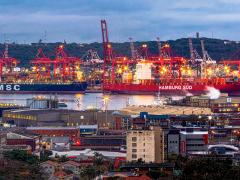
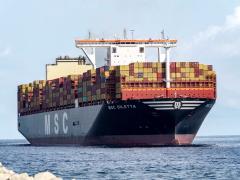
The Port of Cape Town where beef is moved
on reefers doesn’t make logistical sense.
Photo: Shannon Van Zyl
Dry port will help reduce Botswana's dependence on SA
Comments | 0
© Now Media. This content is protected by copyright and may not be adapted or republished. If you would like to discuss cooperation opportunities, please contact: editor@freightnews.co.za.