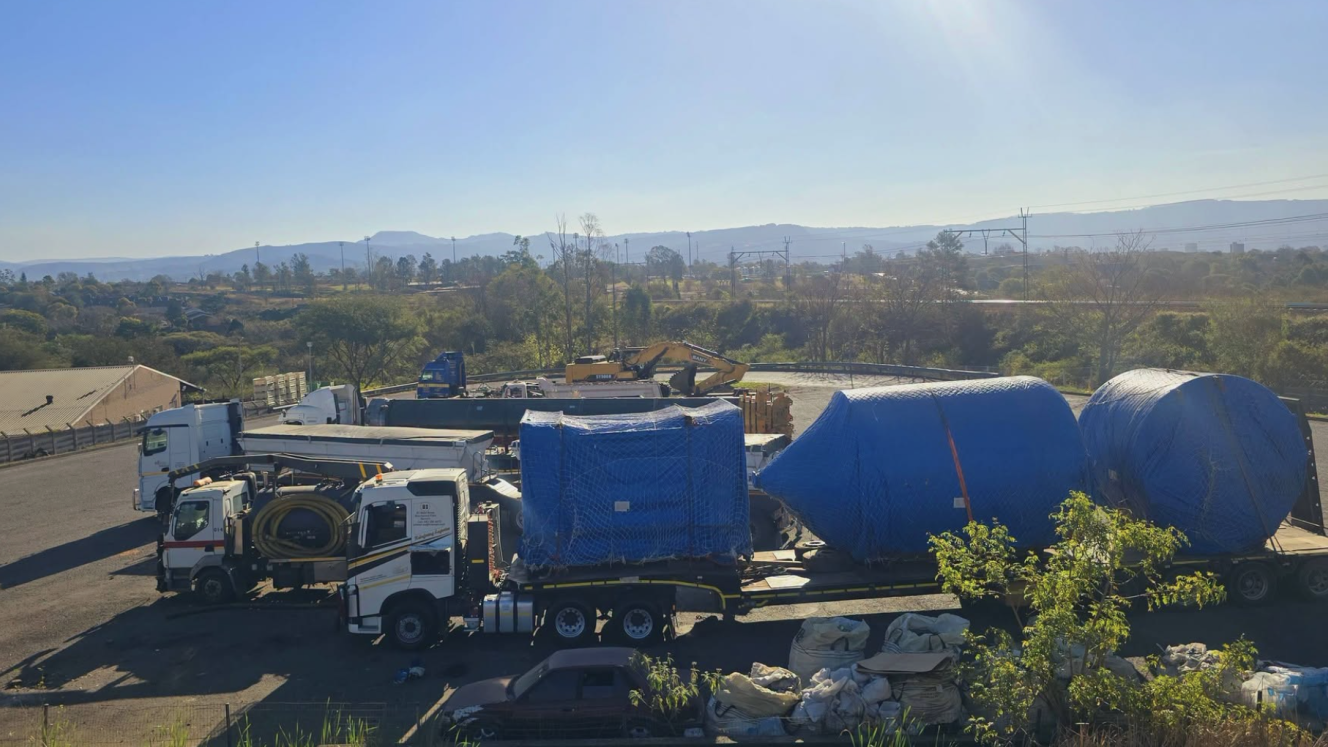
The Department of Transport has assured the road freight sector that it has no intention of deliberately and intentionally harming the sector in light of the looming legislation on high cube containers due to be implemented in January 2019.
John Motsatsing, a director in the department of transport, told a transport committee meeting at the Cape Chamber of Commerce and Industry recently that government had nothing to gain from negatively affecting the sector considering the important economic role it played in the country. “The government wants to ensure that the sector complies with legislation,” he said.
Motsatsing was engaging with industry representatives on the contentious high cube issue. A moratorium granting 12-metre ISO containers blanket exemption to be moved on flat-bed trailers at a height of 4.6 metres comes to an end in January next year when the National Road Traffic Act (NRTA) height restriction of 4.3 metres will again apply.
Motsatsing said government had taken cognisance of industry claims that transporters could not afford to overhaul their fleets from the current flatbed trailers to low bed trailers. Quoting an FTW article in which industry stakeholders said this would cost billions and that the trucking industry could not afford it, Motsatsing said it was not that government was inconsiderate about the costs involved.
“One of our priorities is to ensure that industry can sustain their businesses and continue to employ South Africans,” he said. “As government, we need to make sure that the cost of transportation is minimal. But as government we must also be sure that we take this country forward.”
He said government was wary of setting any precedent that legislation would be changed simply because a sector could not or would not comply or because changes would result in extra costs.
“We must consider a number of factors before we change the legislation. If we start on the route where everyone who does not comply with the legislation must change we are heading to a situation where we are not going to be able to regulate or govern.”
He said there were platforms available for the meeting of minds, engagements between regulators and the sector. This was where considerations on the table could be discussed along with the implications of any legislation or regulation to an industry.
“We can then consider the implication of what we will have to do going forward. In the back of our mind we as regulators do not want to create a bad precedent that sectors in this country think they do not have to comply because there is a cost implication.”
Asked by FTW if government would look at a recapitalisation programme of some sort for transporters wanting to change from flat decks to low decks, Motsatsing said he was hesitant to go that route at all.
“This sector must comply even if there are cost implications. Government will see if it can assist you to a limited extent,” he said. Peter Hugo, chairman of the Cape Chamber of Commerce transport committee, said he welcomed the engagement with Motsatsing as it gave industry some insight into what government was expecting around the high cube legislation.
Mike Walwyn of the Cape’s Port Liaison Forum said meeting with Motsatsing had reopened discussions that had for all intents and purposes reached a stalemate.
“We are engaging and talking to each other and that in itself is very positive,” he said. “Hopefully we can meet government halfway and come up with a solution that works for us as industry and for the regulators.”
INSERT
One of our priorities is to ensure that industry can sustain their businesses and continue to employ South Africans. – John Motsatsing