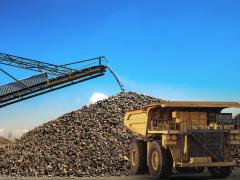
Most West African
governments are putting
policies and plans in place to
diversify their economies away
from their current dependency
on commodities.
They include Nigeria,
Ghana, Mali and Cote
d’Ivoire, where diversification
initiatives are already bearing
fruit.
Investment in beneficiation,
manufacturing and agroprocessing
will create
opportunities for investors and
the logistics sector.
From a government
perspective diversification
will create much-needed jobs
and will raise the region’s
global profile as an investment
destination.
West Africa has the dubious
distinction of being identified
as having the largest human
development gap due to
inequality, according to the
African Human Development
Report.
“Neither sterling growth
performances nor the
quadrupled
commodity
prices seem to
have affected the
region’s share of
world exports,”
says Chukwuma
Agu in a study
on policies and
industrialisation
in West Africa.
“Despite
gains in growth,
West Africa remains a very
marginal (and fragile) player in
the global economy,” adds the
Nigerian economist.
Economic growth in West
Africa averaged 0.4% in 2016
due to a recession in Nigeria,
according to the African
Economic Outlook 2017.
Added to the decline in
commodity prices is the Ebola
epidemic, which led to an
estimated annual GDP loss
between
2014 and
2017 of
US$4.9
billion,
according to
the United
Nations
Development
Group
(UNDG).
Delivering
international
aid is also keeping logistics
moving in the region.
Some US$14.2 billion in
aid is expected to flow into
West Africa in 2017 – second
to East Africa as the biggest
regional recipients of aid in
Africa.
INSERT
Some US$14.2 billion
in aid is expected to
flow into West Africa
in 2017.
Diversifying away from commodities
Comments | 0
© Now Media. This content is protected by copyright and may not be adapted or republished. If you would like to discuss cooperation opportunities, please contact: editor@freightnews.co.za.