(EAC) countries have been
identified as strong growth
prospects, presenting
opportunities for businesses
seeking to grow revenue
outside of the sluggish South
African economy, according to
KPMG Services
economist
Christie Viljoen.
Viljoen said
several EAC
countries were
expected to
register strong
economic
growth despite
low global
commodity
prices and
reduced demand
from key export
destination, China, in 2016.
“East African countries show
strong potential for this year
due to the more diversified
nature of their economies.
The EAC – including Uganda,
Kenya, Tanzania, Rwanda,
Burundi, and now also South
Sudan – are picking the fruits
from a focus on regional
integration as well as intraregional
investment and trade,”
Viljoen said.
Growth in the EAC was
increasingly coming from the
agriculture, construction and
services sectors,
and was less
dependent on
minerals and
other hard
commodities, he
added.
“Effective
government
expenditure is
driving growth
in construction
activity while
the region’s
growing middle
class is providing opportunities
in the retail and tourism
sectors,” he said.
According to the World
Bank, growth forecasts for the
region are similar to economic
growth achieved in 2015
with 5% growth expected for
Uganda, 5.7% for Kenya, 7.2%
for Tanzania and 7.6% for
Rwanda, while Burundi and
South Sudan are expected to
pull out of recession to each
achieve 3.5% growth this year.
“South Africa is much closer
to the bottom of the Africa
growth list. The outlook this
year is dismal compared
to most other African
countries.”
Viljoen said the
EAC region as a
whole was a strong
prospect for
benefiting from
the African
growth
story as
it was
relatively
close to SA,
compared to West
and North Africa,
and connected via both road
and sea transport routes.
“On aggregate it does not
appear as if South African
businesses are really taking
advantage of this strong
growth in East Africa. South
Africa’s exports to the EAC
peaked at $1.68bn during 2011
and declined in each of the four
subsequent years to $1.39bn by
2015,” Viljoen said.
“One exception to highlight
would be the automotive
industry. South Africa’s
vehicle exports to the EAC
have increased from less than
$100m in 2009 to almost
$190m during 2015.”
Viljoen added that South
Africa was part of the Common
Market for East and Southern
Africa (Comesa) along with
Kenya which Minister of Trade
and Industry Rob Davies
had identified as a strategic
partner for local companies
wanting to enter the East
and Central African
markets. He said
Comesa was often
exploited as the first
port of entry for trade
and investment into
the EAC market.
“The relationship
between the two countries’
business communities is also
positive. Between 2009 and
2015 a total of 17 FDI projects
from South Africa into Kenya
were recorded, representing
total capital investment of
R2.2bn.”
INSERT
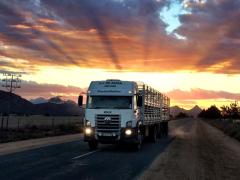
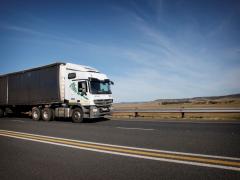
South Africa’s vehicle
exports to the EAC
increased from less
than $100m in 2009
to almost $190m
during 2015.
Diversification boosts growth for EAC
Comments | 0
© Now Media. This content is protected by copyright and may not be adapted or republished. If you would like to discuss cooperation opportunities, please contact: editor@freightnews.co.za.