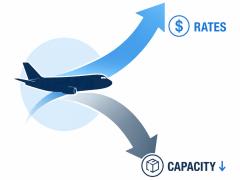
The domestic container market has evolved over recent years into a much more sophisticated operation – with containers moving from a basic storage function to cleverlycustomised industrial and commercial tools, according to Barron Charsley, executive director of container suppliers/ converters, Container World. “It has definitely changed,” he told FTW. “There are still people who buy containers simply for storage purposes. But, from our list of clients, these have gone from about 30% of our revenue to about 5% now.” The industrial consumers, Charsley added, have realised just what containers can be made to do, and new functions are continually being developed for the mining, agricultural, construction and oil exploration markets, for example. Another driving force behind the move away from simple storage is price. According to Charsley, the price of used boxes has rocketed in recent months. “About 18-months ago,” he said, “containers were about R9 500 per unit. But now they’re costing R25 000 and upwards. “The small businesses that used containers for storage have been driven away by price, and appear to be moving to less costly alternatives.” “That being said,” Charsley told FTW, “you have to note that all the big retailers in SA use containers as storage units for overflow stock. One major retail chain, for example, has 250 units on-line at its stores just for this purpose. “But, again, price is playing its part, and it’s tending to be only the large companies that can justify the cost.” The price factor has also led to another change in Container World’s market – with the company records showing a distinct shift from purchasing to renting. “This is justified,” said Charsley, “as rental rates have not increased anywhere near the same level as the sales price.” Questioned about which of the industrial functions are proving the most popular, Charsley said that refrigerated containers (reefers) were still big sellers – in both their blast freezer and coldstorage formats. “But our workshops are running at capacity producing specialised switchgear; accommodation; administrative units; power generating; water and sewerage treatment; clinic units and the like,” he added. “We have such a diverse range of uses and different types of users that it more than keeps us busy.”
Distinct shift from purchasing to renting
Comments | 0
© Now Media. This content is protected by copyright and may not be adapted or republished. If you would like to discuss cooperation opportunities, please contact: editor@freightnews.co.za.