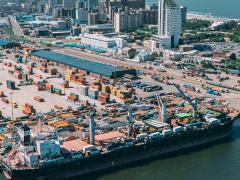
Road freight remains the most reliable form of transport into Africa, says Steve Laurie, operations director for Kuehne+Nagel in Lusaka, Zambia. Not only are the various government departments and customs authorities going out of their way to improve services in an effort to move cargo more quickly, but infrastructure upgrades are also on the cards like the building of a bridge at Kazungula. “Relying on the ferry is often problematic and the bridge will ensure that there are fewer delays and cargo will move faster.” Laurie says there is no doubt that road freight remains the preferred mode of transport despite the issues around congestion at border posts and the often bad roads in some areas in Africa. “We have to make it work as there are not many other alternatives, especially in Zambia. There are no frequent freighter air services unless you charter one – and while rail freight is an alternative there have always been challenges.” He said the turnaround times as well as the availability of rolling stock was one of the major issues with using rail transport despite most companies having agreements with Transnet and other railways. “Cargo is always urgent regardless of whether it is road, air or rail freight. Our clients cannot afford to wait weeks just to get loaded as is sometimes the case with rail.” He said while Kuehne+Nagel concentrated mostly on the Durban and Dar es Salaam ports, the two alternative routes for Zambia – Beira in Mozambique and Walvis Bay in Namibia – were starting to be used more and more. “Logistics providers only start to benefit when they’re able to provide cargo for inbound and outbound routes – otherwise it is not viable. While the fuel price on road freight has come down, it still impacts significantly on cost. Therefore having alternative routes for the country is beneficial to our clients.”
‘Despite the challenges, road freight is king’
Comments | 0
© Now Media. This content is protected by copyright and may not be adapted or republished. If you would like to discuss cooperation opportunities, please contact: editor@freightnews.co.za.