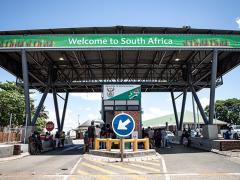
Non-Tariff Barriers (NTBs) and poor trade facilitation instruments remain the biggest impediments to economic growth in Africa today. With intra-African trade estimated at only around 12% – far below the world average – removing these barriers to facilitate more regional trade has become a key focus of regional organisations. While NTBs most commonly arise from measures taken by governments and authorities to protect domestic industries from foreign competition, they are getting out of hand in sub- Saharan Africa, stif ling trade. According to the World Trade Organisation (WTO), countries on the continent have imposed more NTBs on trade between themselves than on trade with third countries, while efforts at harmonising technical resolutions and standards, sanitary and phytosanitary measures as well as rules of origin have been timid at best – only adding to the tremendous cost of doing business in Africa. A World Bank Report entitled De-fragmenting Africa and released in 2012 found that a company such as Shoprite, for example, spent an average $20 000 a week on securing import permits to distribute meat, milk and plant-based goods to its stores in Zambia alone, while there could sometimes be up to 1600 documents accompanying each truck the company sends with a load across borders in the Southern African Development Community (SADC). Africa is almost the most expensive continent in which to do business, according to former WTO deputy director-general Valentine Rugwabiza. Changing the state of affairs and removing NTBs therefore has to remain at the top of the agenda – not only to facilitate more trade but also to address the escalating costs, according to Mark Pearson, an independent consultant and previously director of Trademark Southern Africa (TMSA), who has worked as an economist in Africa for more than 30 years. “The five issues most commonly complained about are lengthy and costly customs clearance procedures; rules of origin; costly road user charges/ fees; inadequate trade-related infrastructure; and sanitary and phytosanitary measures,” he told FTW. “Removing NTBs has been challenging along with the halting of new NTBs that pop up as the old ones get resolved.” In addition to this, said Pearson, there are no rulesbased removal and enforcement mechanisms in place, although some regional organisations, in particular the East African Community (EAC), are making progress to legislate against NTBs at the regional level. An online system for reporting, monitoring and eliminating nontariff barriers (NTBs) in the EAC, SADC and Common Market for Eastern and Southern Africa (Comesa) regional blocs has made some difference to NTBs in recent years. “The system has been a great help,” said Pearson, “but it works on a ‘name and shame’ principle, so if there is no shame then the system is not effective.” In March this year the system was put to the test after a Zambian transport company carrying copper into Zimbabwe was detained at the Vic Falls weighbridge because the truck exhaust was pointing to the ground instead of up into the air, despite the fact that it was designed to point downwards by the manufacturer. After it was registered on the online system Zimbabwe conceded that while it was law for exhausts to point up and not down in the country, it would not enforce this requirement on foreignregistered trucks as long as this was not in their domestic legislation. This is just one of many examples of the system addressing complaints. Anything from trucks being detained for no reason to excessive delays at the border post is reported while all efforts are made to resolve issues quickly. And with more than 74% of all complaints logged on the system resolved, headway is being made gradually. Other NTBs that have been successfully resolved by the system include the lifting of weight restrictions at the Kariba Bridge, the stopping of Zambian police holding crossborder permits as security until fines are paid, and the removal of arbitrary transit fees and charges on road networks in the region. Active complaints currently lodged on the system include a discriminatory excise duty regime that discriminates against imported cigarettes and foreign manufacturers of cigarettes being applied in Malawi, various incidents at both Martins Drift border post and at Arugula where officials are imposing Botswana height restrictions on South African-registered vehicles, a highway attack that occurred in Tanzania and the introduction of a new council levy for external trucks entering Zambia, in addition to other existing charges and levies in the Nakonde District. INSERT & CAPTION Removing NTBs has been challenging, along with the halting of new NTBs that pop up as the old ones get resolved. – Mark Pearson INSERT Shoprite in 2012 spent an average $20 000 a week on securing import permits to distribute meat, milk and plant-based goods to its stores in Zambia.
‘Declare war on Non-Tariff Barriers!’
Comments | 0
© Now Media. This content is protected by copyright and may not be adapted or republished. If you would like to discuss cooperation opportunities, please contact: editor@freightnews.co.za.