The Democratic Alliance (DA) has welcomed elements of President Cyril Ramaphosa’s State of the Nation Address (Sona) but called for faster economic reforms to boost growth, reduce unemployment and lower living costs under the Government of National Unity (GNU).
DA leader John Steenhuisen said the economy had shown signs of recovery since the formation of the GNU but reforms must now gather pace to accelerate growth and job creation.
“Economic recovery under the GNU is now under way. Inflation has moderated. Investor confidence is showing signs of recovery. The country has exited the grey list. Government debt appears to be stabilising. These are important signals that South Africa can rise,” Steenhuisen said.
However, he pointed out that sustained prosperity required urgent action, including the speeding up of infrastructure reforms.
“South Africa must accelerate economic growth if we are to reduce unemployment meaningfully and lower the cost of living,” Steenhuisen said.
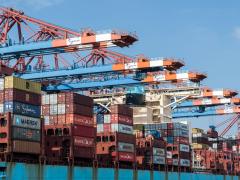
“The DA will keep fighting for the correct interventions in the economy that the president should have announced tonight, including replacing BEE with a model that will bring real inclusion and empowerment for all, a rapid process to unbundle and concession the management of our ports and rail infrastructure, professionalising the public service, outlawing cadre deployment and corruption, and restoring accountability in public finances.”
He welcomed energy reforms allowing private investment in transmission but insisted on the implementation of planned reforms.
“Eskom cannot hold the monopoly on transmission and assets must be transferred out of the National Transmission Company of South Africa (NTCSA).”
He supported the declaration of a state of disaster for foot-and-mouth disease control.
“This will strengthen the work already under way, accelerating rollout, tightening movement controls, and unlocking the resources our veterinary teams and farmers urgently need.”
He said despite Ramaphosa’s admission of municipal collapse, he “did not go far enough to deliver action to fix the broken ones”.
He welcomed commitments to hold accounting officers personally liable for audit failures but linked water crises to “ANC mayors and cadre deployment”.
Steenhuisen highlighted DA-governed areas as proof of effective service delivery.
“Where the DA governs we deliver water within the existing framework, proof that it can be done.”
He believes the GNU has created an opportunity to stabilise the country.
“But stability must now become sustained reform, and reform must translate into local delivery and prosperity for all South Africans. This year, the most powerful reform is in the hands of the voters.”
Agbiz CEO Theo Boshoff welcomed the emphasis on agriculture’s contribution to inclusive growth and employment, but raised red flags regarding policy contradictions.
“Reference to increased excise and restrictions on advertising in the liquor industry is a case in point. On the one hand, a new structure is being created to investigate illicit trade, but on the other hand, we are making policy pronouncements that make it near-impossible for the legitimate industry to compete with the illicit economy. A dose of realism and pragmatism is sorely needed,” Boshoff said.
He also called for stronger private-sector involvement in the fight against FMD.
“To the president’s credit, he recognised the importance of combating FMD, but we would have liked to see more details and (the extension of) an olive branch to the private sector to assist.
“The focus must surely now be to vaccinate as many animals as possible in the shortest possible time. For this to work, we need to collaborate in the same manner as we did during the Covid-19 vaccine rollout.”