2018 has got off to an ominous start with year-on-year January freight losses up by 18.5% in the Europe, Middle East and Africa (Emea) region.
This comes in the wake of the Transported Asset Protection Association’s (Tapa) newly released Incident Information Service (IIS) Annual Report for 2017 which revealed a 10.3% increase in recorded cargo crimes in the region last year.
According to Tapa it is the growing threat of cargo crime to supply chains that has led to a record take-up of the organisation’s supply chain security standards.
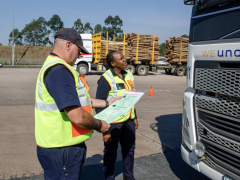
“The number of Tapa Facility Security Requirements (FSR) and Trucking Security Requirements (TSR) certifications in the Emea region is now higher than at any time in our 20-year history,” said Mark Gruentjes, Tapa Emea’s standards lead. “Not only are more companies recognising the value of operating Tapa-approved facilities and trucking services to combat rising crime, but more manufacturers are asking or requiring their logistics service providers to meet these standards.”
The organisation has seen a 16.6% increase in the number of FSR certifications and a 41.5% increase in TSR certifications.
According to Andre Du Venage, CEO of Secure Logistics and Tapa chairman in South Africa, the uptake locally, however, is still very low.
“The concept is still regarded by many as a new one unfortunately,” he told FTW. Having appointed the first trainers in 2016, the organisation is pushing for local companies to adopt the Tapa security standards. “We will host FSR and TSR training in July this year followed by a national conference in Johannesburg.” He said cargo crime was of increasing concern – especially in South Africa where very little data was available.
“I think the statistics that we do have are really only the tip of the iceberg and the situation is far worse than we realise.” Du Venage said even if policing of cargo crimes was made a top priority it would take the South African Police Service (SAPS) years before they made any impact because it had grown so exponentially.
“Also some of the official statistics available don’t make sense. We are suddenly seeing far fewer incidents in Heidelberg and Warden, but far more in Alberton. We believe there is political manipulation of this data and that means we don’t have a clear picture of the situation on the ground.”
Nico Snyman, risk specialist and the founder and president of the Global Transport and Asset Intelligence Bureau (GTAIB), a non-profit company that looks at industry from a public benefit point of view, said moving cargo in South Africa was increasingly challenging.
“It is the primary port of entry to the African continent and thus the gateway into Africa. All High Value Goods (HVG) are delivered through the South African ports of Durban, Richards Bay, Ngqura, and Cape Town as well as OR Tambo International airport,” he said. “This information alone provides five focus points for any criminal, organised crime group or syndicate. Most deliveries are scheduled and many people in this logistical pipeline know what is in the container, when it was delivered, when cleared and when the rail or road transport starts. “It is easy to plan cargo crime,” said Snyman.
“There has been a great fluctuation in cargo crime over the past 10 years. It is still unacceptably high, and this is indicative of an industry constantly under attack. But, over the last year, there has been a slight decrease in South Africa,” he said. “This must not be seen as a successful crime prevention strategy, as there is no valid proof of what is working and what not. It can also not be credited to the industry, as the industry cannot prove the internal control strategies they have and therefore neither party can take the credit for the success or the slight decrease.”
According to Tapa, the UK and Sweden were the two countries with the highest rates of cargo crimes recorded to its IIS in January. Only five losses were reported during the month in January. Three of these were truck hijackings in South Africa. In Zimbabwe a crane was used to break into a heavily protected warehouse while a fifth incident occurred in Nigeria. The details around this incident were not clear.