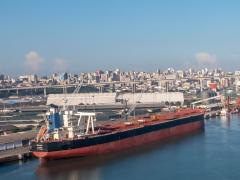
While Africa is expected to account for 7% of global rare earth supply by 2025, much of this output is unlikely to move up the value chain. According to research by BMI, the majority of rare earth material produced in African markets is expected to be exported as low-value concentrates or mid-value rare earth carbonates, rather than finished oxides. Olga Savina, a senior commodities analyst for BMI, said a notable exception was a project in Phalaborwa in South Africa, which is expected to produce separate rare earth oxides on site. “This reflects the inherent complexity of rare earth value addition,” said Savina. “Unlike bulk commodities such as aluminium or copper, rare earths require chemically intensive and environmentally challenging separation processes to produce high-purity oxides.” This comes as African countries increasingly look at ways to beneficiate minerals prior to exporting. Governments are using a mix of policy, regulation and incentives to push more mineral beneficiation onto local soil – with varying degrees of success. She said export bans were increasingly being introduced across the continent. “Fundamentally, we hold the view that export restrictions are not always the best way to encourage processing,” said Savina. “This is not just because they can harm a market’s reputation as a good place to do business, but also because they reduce demand for the commodity which is being targeted.” In Africa, there is significant supply concentration within several commodities, most notably cobalt, with more than 70% coming from the Democratic Republic of the Congo (DRC). Its decision to ban exports drove a sharp surge in cobalt prices in 2025. “We now expect prices to average at around $25 per pound in 2026. This is up more than 50% from the 2025 average and reflects the DRC’s decision to cap cobalt exports at roughly half of typical annual production that is expected to leave global cobalt supply materially below 2024 levels for at least the next three years.” She said while cobalt was an extreme example, it did illustrate a broader dynamic. “The greater a country’s share of global supply, the more leverage it has over the market and the greater the price impact when supply is constrained. However, that same price response also amplifies the demand-side reaction, ultimately limiting the durability of that leverage.” According to Savina, the move to drive more beneficiation through policies such as export restrictions must be finely balanced. “While it helps to encourage local processing, it is important to ensure that it is not pushing downstream consumers to reduce demand or even switch to alternate supplies.” LV
Countries warned about pitfalls of export bans
Comments | 0
© Now Media. This content is protected by copyright and may not be adapted or republished. If you would like to discuss cooperation opportunities, please contact: editor@freightnews.co.za.