Cosco Shipping
Africa is upbeat
about future
growth following
the merger of China Shipping
and Cosco earlier this year to
create a powerful new player
in the Far East trade.
In an industry that faces
a triple
whammy of
overcapacity
and
unsustainable
rates in an
economically
static climate,
Cosco
Shipping
Africa
managing
director,
Captain Wan
Jun, believes
that the new
entity brings
significant value to the
market.
“We believe there are
good synergies between the
two lines. China Shipping
was strong in West Africa
while Cosco has always had
a strong presence in the
South African market, so the
merger brings together the
strengths of both parties.
“By combining the staff
and office premises we are
able to benefit from cost
savings, while the combined
company offers a far better
service,” he said.
South Africa clearly plays
a key role in the company’s
Africa vision, providing
a gateway to the likes of
Namibia and Zimbabwe.
Dar es Salaam and
Mombasa
are the line’s
gateways to
East Africa
while Lagos
and Lome
are the main
ports for
West Africa.
Further
expansion
in the region
is on the
planning
boards.
“At the
moment we
offer capacity of less than
6000 TEUs for the whole
African continent. By 2018
weekly capacity will be over
16000 TEUs.”
Shipping lines however
need to look beyond port-toport
shipment, in Wan Jun’s
view.
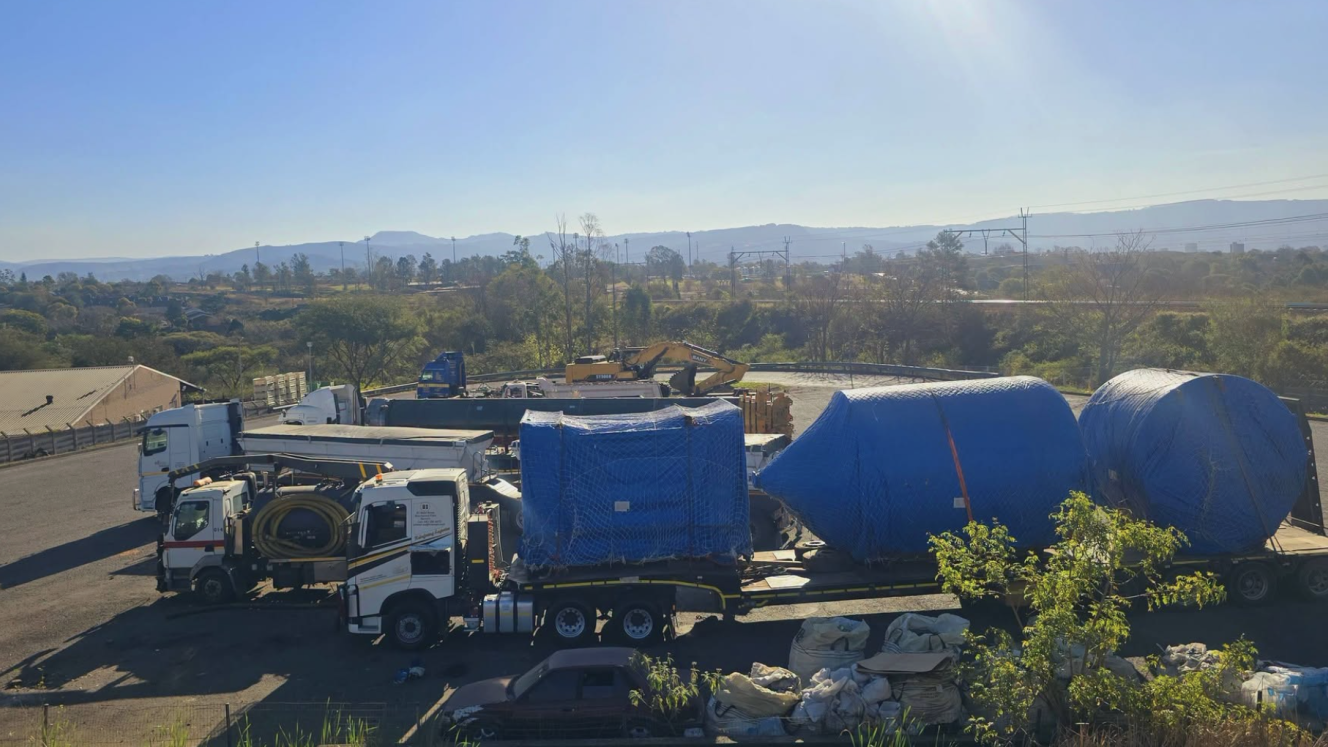
“We need to extend
our service beyond ocean
freight, from point of
collection to point of
delivery. We are already
looking at the inland
haulage leg, offering our
customers multimodal
logistics solutions.”
The company will sign
agreements with warehouse
providers and inland haulage
operators like Transnet
Freight Rail to offer an
outsourced option, according
to Wan Jun.
Several customers already
have agreements in place,
but Cosco will be pursuing
this full service option
aggressively in the future.
And while containers are a
big focus for the line, projects
are equally so.
“Cosco is the global Number
1 in terms of breakbulk
capacity and offers three
sailings a month from the Far
East to Africa – and it’s a sector
where local expertise can make
a difference," he said.
Despite the economic
headwinds, the line has seen
volumes improving,
recording an
increase in
volumes
shipped of
3-4% in
the past ten
months.
“This growth is
particularly evident in West
Africa where we’re finding
lucrative opportunities in
transhipment cargo from
Cape Town to West Africa,
for example – where the
ocean freight rate is far
higher than on the longhaul
and over-served Far East-
South Africa trade lane.”
INSERT & CAPTION
We are already
looking at the inland
haulage leg, offering
our customers
multimodal logistics
solutions.
– Captain Wan Jun
Cosco looks beyond ocean freight
Comments | 0
© Now Media. This content is protected by copyright and may not be adapted or republished. If you would like to discuss cooperation opportunities, please contact: editor@freightnews.co.za.