The advent of technology,
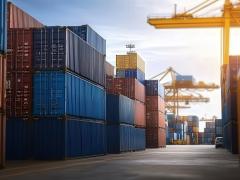
like the advent of
containerisation, is challenging
every traditional norm.
For Deutsche Afrika Linien
(DAL), which made a major
contribution to the development
of container usage in the
operational,
procedural
and legislative
arenas – its
solution-driven
philosophy has
been a gamechanger.
“We were
instrumental
in developing
customised
solutions for the
containerised
movement of various products,”
says managing director David
McCallum. “An example is in the
exportation of fully assembled
motor vehicles.”
And clearly the rapid pace of
technological developments will
demand more solution-driven
thinking.
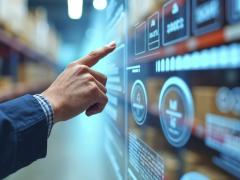
“Technology is already having
an impact on the movement
of cargo in containers and the
container itself. “It will affect
how the container is moved –
with the likes of autonomous
cranes, trucks, trains and ships
fast becoming
a reality.
“It will also inf luence the
availability and amount of
information
related to the
movement of
the container
– a far more
transparent
process with
high levels of
traceability. I
would expect
that the
container will
be further
developed to
become “smarter”.
It will push information to
various parties thereby enabling
better scheduling and helping to
reduce stock holding and shorten
transit and lead times.”
For the shipping line,
technology improvements
will provide an opportunity to
proactively manage the cargo
in its care, says McCallum. “It
will be able to anticipate service
and equipment failures earlier,
thus allowing it to take the
relevant action to ensure it
maintains its service levels
and achieves the “5 Rights of
Logistics”.
“The advent of technologies
such as 3D printing will
certainly have an impact
on product f lows and thus
the movement of cargo
in containers,” says
McCallum.
“And while it’s
impossible to
quantify the impact
of containerisation
on the
industry, one only
needs to
look at how
organisations
are able to meet
customer needs
with reduced
stock holding
to see how
the container
has helped to
reduce lead
times and
make supply
chains more
efficient.”
Technology will enable lines
to anticipate service and
equipment failures earlier,
thus allowing them to take
the relevant action.
– David McCallum