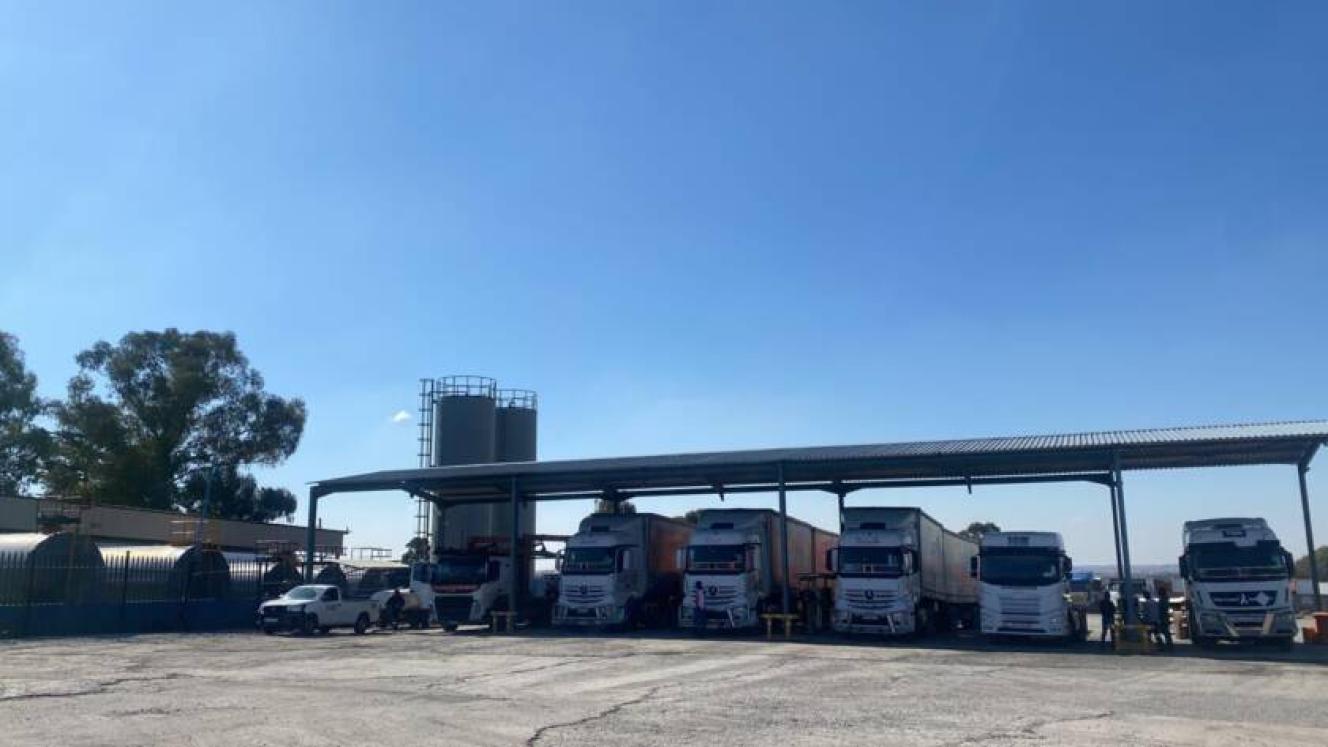
The annual Land-Linked Zambia Conference will take place in Lusaka at the end of April under the theme Beyond Borders: Reimagining Africa’s Transport Corridors for Prosperity, highlighting the urgent need for a paradigm shift in how African countries collaborate to drive economic integration. Freight News Features Editor Liesl Venter spoke to Chimwemwe Nyirenda, CEO of Africast Limited, organisers of the event, to find out more. LV: What is the core objective of the Land-Linked Zambia Conference and how does it support Zambia’s positioning as a regional logistics and trade hub? CN: The conference is designed to position Zambia as the anchor of regional trade and logistics in southern Africa. Its core objective is to convene government, private sector and regional stakeholders to align on infrastructure priorities, policy harmonisation and investment opportunities. By doing so, Zambia strengthens its role as a land-linked hub that connects inland economies Road congestion, limited rail capacity and bureaucratic delays at customs points slow down trade flows. Additionally, ageing transport assets and insufficient digitalisation of logistics processes add to costs and reduce competitiveness. Addressing these bottlenecks requires coordinated investment and policy reforms across the region. LV: How important are corridor developments such as rail and port linkages (including routes to Angola, Tanzania and Mozambique) in unlocking trade growth and where are we seeing the most progress? CN: Corridor developments are absolutely critical. Rail revitalisation projects and port linkages to Angola, Tanzania and Mozambique offer Zambia diversified access to global shipping routes. The Lobito Corridor to Angola, for example, is showing strong progress and could become a game changer by opening a shorter, cost-effective path to the Atlantic. Similarly, upgrades along the Dar es Salaam and Beira corridors are vital in balancing east-west to global markets through efficient corridors. LV: The Copperbelt remains central to regional mining activity. What role do you see Zambia playing in connecting these resources to global markets more efficiently? CN: The Copperbelt is the heartbeat of regional mining and Zambia is uniquely placed to serve as the bridge between resource-rich areas and international buyers. By investing in multimodal transport systems, rail, road and port linkages, Zambia can reduce transit times and costs, ensuring copper and other minerals reach global markets more competitively. This role is not just about moving commodities; it’s about creating predictable, reliable supply chains that attract further investment. LV: From your perspective, what are the biggest logistical bottlenecks currently affecting trade flows through Zambia and the broader Copperbelt region? CN: The biggest challenges lie in infrastructure gaps and inefficiencies at border crossings. trade flows. These corridors are not just infrastructure projects – they are strategic enablers of regional integration and growth. LV: Looking ahead, what outcomes or commitments would you like to see emerge from this year’s conference that could materially improve trade efficiency in the region? CN: I would like to see concrete commitments around accelerated investment in rail and road modernisation, streamlined border processes through digital customs systems, public-private partnerships that unlock financing for large-scale projects and regional policy alignment to ensure corridors operate seamlessly across borders. If these commitments are advanced, Zambia and the Copperbelt can materially improve trade efficiency, reduce costs and enhance competitiveness in global markets.
Conference targets corridor rethink to unlock regional trade
Comments | 0
© Now Media. This content is protected by copyright and may not be adapted or republished. If you would like to discuss cooperation opportunities, please contact: editor@freightnews.co.za.