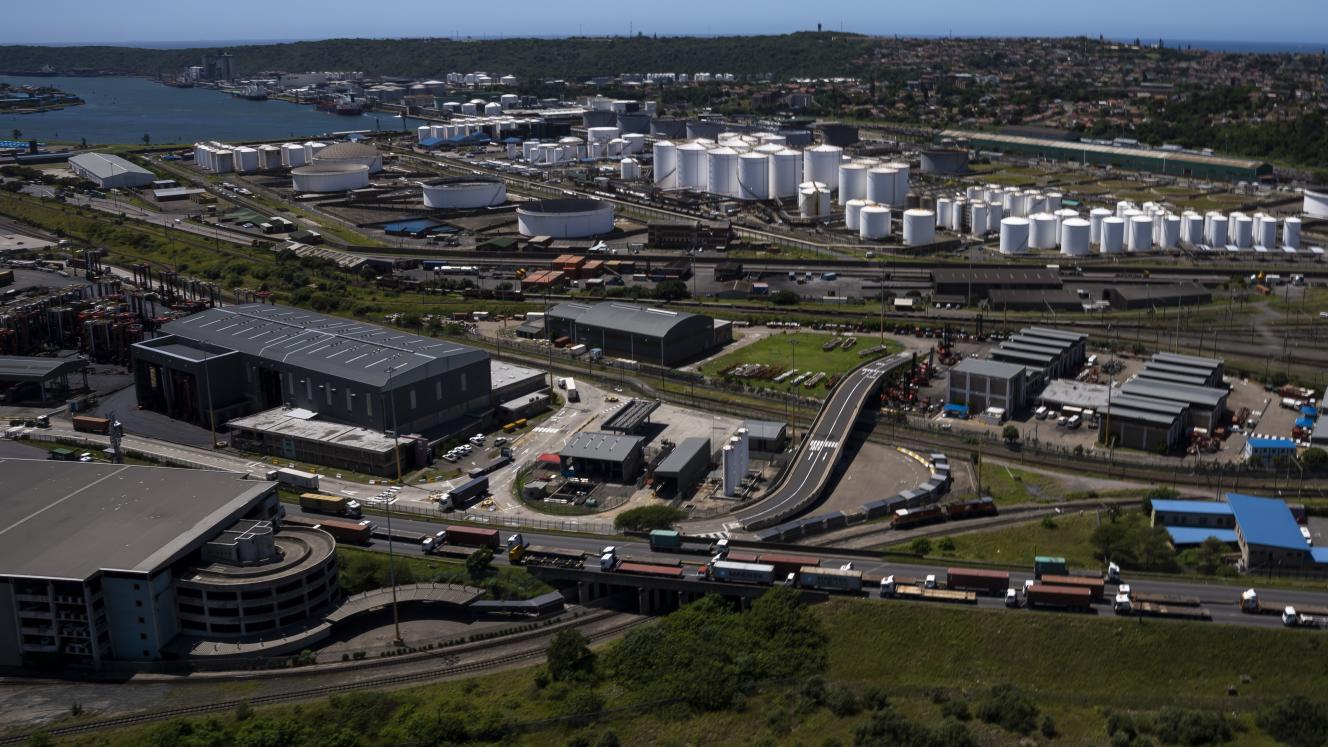
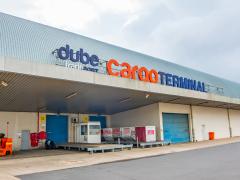
A new warehouse has been built by Cargo Management & Logistics (CML) to support the expansion of the company’s footprint on the Copperbelt and within Zambia. The company now has 4 000 sqm of paved yard, 1 000 sqm of bonded warehousing and 1 500 sqm of non-bonded warehousing in the Ndola industrial district, with a bund wall in the warehouse to protect the environment from any possible spills. According to operations manager Richard Powell, the new facilities are designed to handle high-value and hazardous cargo, with sufficient space to handle full shipments of up to 10 000 tons of chemicals and fertilisers. The new warehouse has been approved and certified by a Risk Management Assessor (DPS March of South Africa). Vessels chartered out of Russia are being used to transport commodities such as ammonium nitrate to Beira and Dar es Salaam. According to Powell, efficiencies in the port of Dar es Salaam have improved markedly. Vessels are now pre-cleared and CML recently moved a shipment for a mining company from Dar es Salaam to Lusaka in five days, from the vessel berthing. Investment in the ports of Beira and Walvis Bay has given Zambian importers and exporters two more alternatives to Durban. CML has diversified its operations in Lusaka and is providing clearing and warehousing services to a number of chain stores, according to director John Mumba, who is based in the capital. The company is operating out of new 1 600-sqm premises in Lusaka and is geared to support investment in Zambia. “We remain a good investment destination, despite some current cost implications. Foreign companies are free to trade and to remit finances,” he says. Some borders are currently experiencing delays while the Zambia Revenue Authority streamlines clearing operations through the introduction of the Asycuda World Customs system. Some clearing functions have moved from the borders to a centralised facility in Lusaka. CML has deployed additional staff to the borders and extended its office hours in order to help importers expedite the movement of cargo, Mumba says. Another cost that importers and exporters have to manage is the vacillating exchange rate, which is a mirror of the state of the mining industry in the country. Low copper prices drive down the value of the Kwacha as copper makes up 60% of Zambian exports. With strict VAT legislation in place for mining companies, engaging a logistics company which has the right procedures, tracking systems and staff in place is vital, according to Powell. Many of the procedures and systems implemented by CML UK as part of its ISO 9001 accreditation are utilised within the Zambian offices. “They are always being looked at to see how they can be improved – and to accommodate circumstances such as the current border delays in order to minimise disruption to clients and their valuable cargo,” says Powell. INSERT & CAPTION CML has diversified its operations in Lusaka, providing clearing and warehousing services to a number of chain stores. – John Mumba CAPTION The new CML warehouse in Ndola.
CML adds warehouse capacity to support Copperbelt expansion
Comments | 0
© Now Media. This content is protected by copyright and may not be adapted or republished. If you would like to discuss cooperation opportunities, please contact: editor@freightnews.co.za.