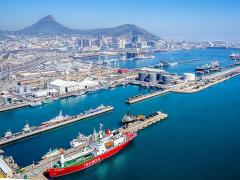
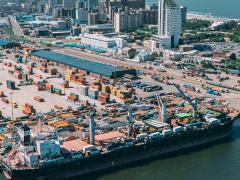
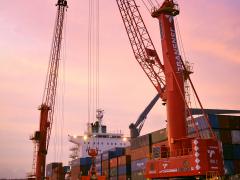
Something had to give, and it did, as a savage storm relentlessly pummelled the Cape coast last week, wreaking havoc on shipping, related operations and business in general. There were vessels running ground or coming close to it, breakdowns in mountainous seas, containers lost overboard and a toxic ‘threat’ as hazardous material washed ashore along the Atlantic Seaboard. The upmarket seaside suburb of Sunset Beach – unwilling 26-day host to the stranded Maersk-chartered containership Sea-Land Express in August 2003, was almost in a similar dilemma on Tuesday (June 23) when the 243-metre long bulk carrier, Doce River, lying in Table Bay along with three others, started dragging her anchors. As the vessel came perilously close – no more than 500 metres – from running aground, the crew feverishly managed to start the engine and she was ordered 20 miles out to sea by port authorities. Cape Town harbour master, Captain Ravi Naicker, believes the crew was not really monitoring the adverse weather when strong north-westerly winds and swells of up to six metres picked up. “It was close,” he says of what might have happened. Another bulk carrier, Kiran, suffered engine failure, coming perilously close to the Kommetjie coast before being taken on tow by the salvage tug, Smit Amandla, and brought to the safe False Bay waters over the weekend. The 4 145TEU containership Safmarine Meru was en route from Port Elizabeth to Cape Town on June 23 when she hit gale force winds in excess of 100km/h (65 knots) and high seas of minimum 12-metre swells, resulting in 21 containers being swept overboard. The vessel immediately informed Cape Town port control and Cape Town Radio of the position of the stricken containers and a navigation warning was issued. Two containers holding highly toxic Class 6.1 chemical, Cresylic acid, were washed up at Camps Bay and Sea Point and a third spotted off Hout Bay, but all were subsequently recovered by Safmarine-appointed Svizer Salvage, which enlisted the aid of fishing vessels, a helicopter and a standby tug to look out for the missing boxes. As the search continued for the remaining 18 boxes filled with timber and general cargo, Safmarine Meru berthed on Friday afternoon at Cape Town container terminal and was due to set sail the following evening. The barge, Margaret, carrying 13 river barges from China to Rotterdam, broke her tow from the tug, Salvaliant, and was left high and dry on the rocks at Jacobsbaai, near Saldanha, with salvage attempts under way. Smit Amandla Marine salvage crews were at Mossel Bay on Monday, ahead of clearing the badly damaged remains of an unmanned Dutch-owned barge, GTO XV11, en route from Maputo to Port Harcourt, Nigeria, when she parted company with the tug, Hako 18, and ran aground at Three Sisters Rock, west of the Knysna Heads. She was carrying a containerised cargo of construction machinery, feared lost. Cape Town container terminal was closed for at least 17 hours due to the atrocious weather. “It’s been a terrible week for all of us in the port in Cape Town and for Bafana Bafana (losing 1-0 to Brazil in the Soccer Confederations Cup),” said TPT planning manager, Mike Powles. National Ports Authority pilots were prevented from bringing at least three vessels into port once swells reached six metres but harbour master Naicker says of the 34-hour port closure claimed by some that it was more like six hours. “The 34 hours may have come from a cargo working perspective but certain berths remained operational.” Naicker, who has also served as harbour master at Richards Bay and Saldanha, said of last week’s events: “One is always worried about what is going to happen next so monitoring a situation, being proactive, is all important.” Sunny, but chilly, Table Bay has resembled a duck pond since Thurday, June 25, as vessel traffic returns to normality.
Cape coast carnage!
Comments | 0
© Now Media. This content is protected by copyright and may not be adapted or republished. If you would like to discuss cooperation opportunities, please contact: editor@freightnews.co.za.