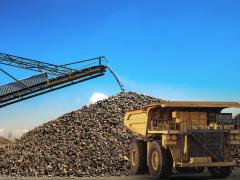
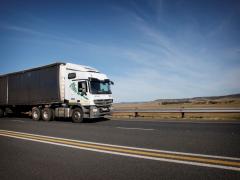
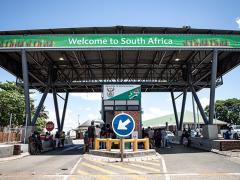
Transnet Freight Rail could be in for yet another name change – to “Transnet Bulk Rail” judging from the 2014 budget and the earlier State of the Nation Address by president Jacob Zuma. Neither speech recognised the need for rail to support the industrial and manufacturing sectors of the economy, which is where the jobs and future prosperity lie. Instead, the focus is on moving millions more tons of unprocessed ore to the ports. Listing the achievements over the past year, Gordhan said “Transnet has increased capacity on its coal line. Plans are in place to further expand the coal, iron ore and manganese lines”. This is in line with Transnet’s “Market Demand Strategy,” which focuses on the movement of coal, iron and manganese. There is no mention of other freight in Gordhan’s speech. Zuma’s only allusion to the state rail utility was to say “Transnet is implementing its massive R300-billion market demand strategy, building much needed transport infrastructure”. As for the trade gateways, he said “the country’s harbours and ports have been improved” as one of the gains over the past 20 years. “Port” appears in Gordhan’s speech twice. Once in a reference to the Lebombo one stop border post as a “port of entry”. And once when referring to measures to support economic development: “Increase investment in economic infrastructure, including rail, water, roads and ports”. This focus on moving lumps of coal, manganese, iron and chrome ore contradicts the minerals beneficiation strategy of the Department of Mineral Resources published in June 2011. “An independent evaluation of South Africa’s non-energy in-situ mineral wealth is estimated at US$2.5 trillion (Citibank report, May 2010), making the country the wealthiest mining jurisdiction. However, a considerable amount of South Africa’s mineral resources are exported as raw ores or only partially processed. Although South Africa has steadily improved its ratio of beneficiated to primary products exported since the 1970s, these ratios are still well below the potential suggested by the quality and quantity of its mineral resources endowment,” says the document. “South Africa continues to upgrade and create essential infrastructure, including an extensive transport network (road, rail, ports and pipelines), information and communications infrastructure. As a result of this focused investment, the country is best positioned to take full advantage of value addition programmes,” it continues. Zuma did not mention “beneficiation” or “valueadded” once in his speech. Gordhan’s one mention is “special economic zones are allocated R3.6 billion to promote value-added exports and generate jobs in economically disadvantaged parts of the country”. This is in sharp contrast to at least five of South Africa’s Southern African Development Community (SADC) partners, where logistics development has become a central tenant of government policy – Botswana, Zambia, Tanzania, Namibia and Mauritius. For South African hauliers this is good news – freight will continue to move on the road. Shippers and cargo owners will have to continue factoring in the increasing cost of road transport, which is being driven up by both the escalating fuel price and the carbon footprint.
Budget ignores beneficiation imperative
Comments | 0
© Now Media. This content is protected by copyright and may not be adapted or republished. If you would like to discuss cooperation opportunities, please contact: editor@freightnews.co.za.