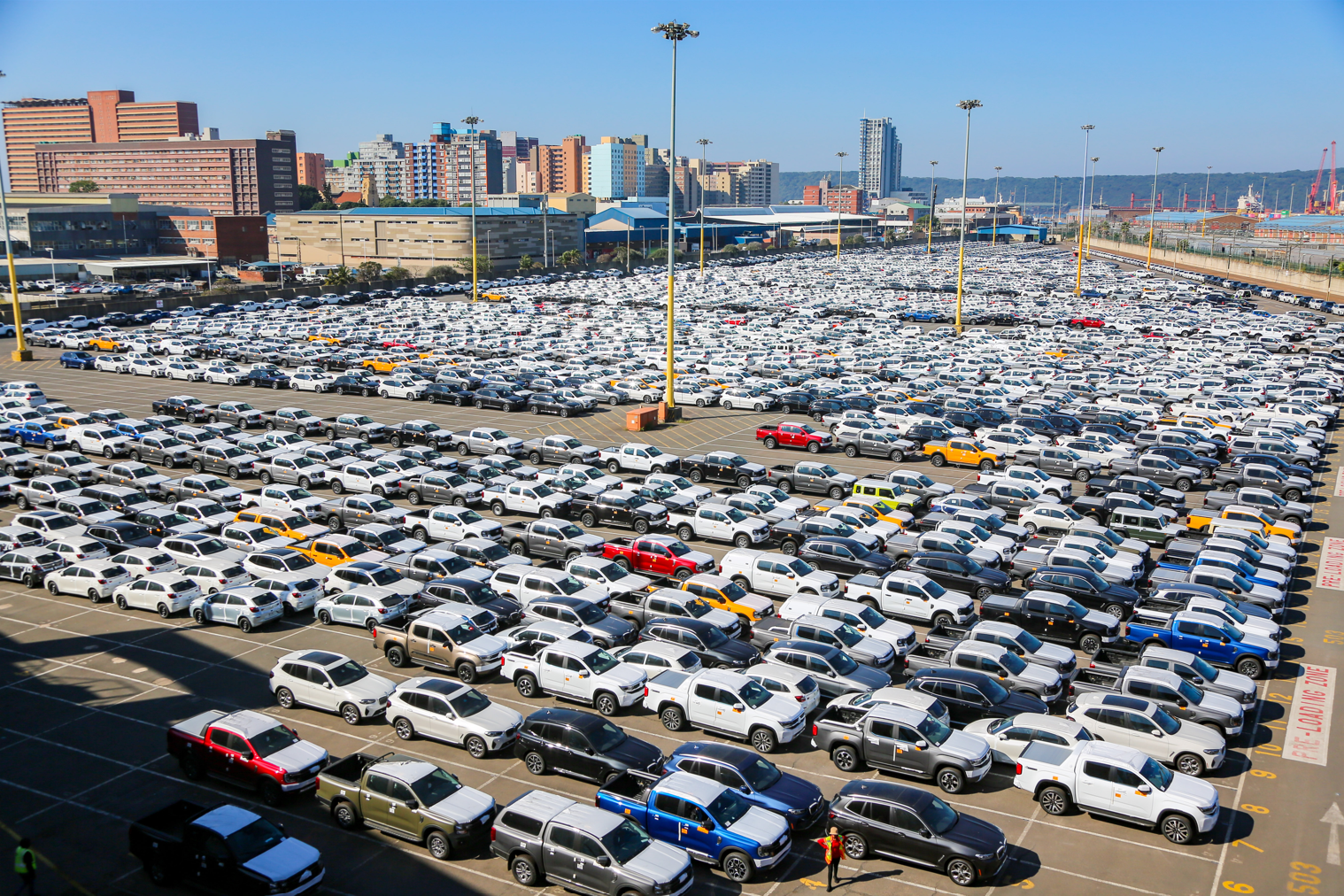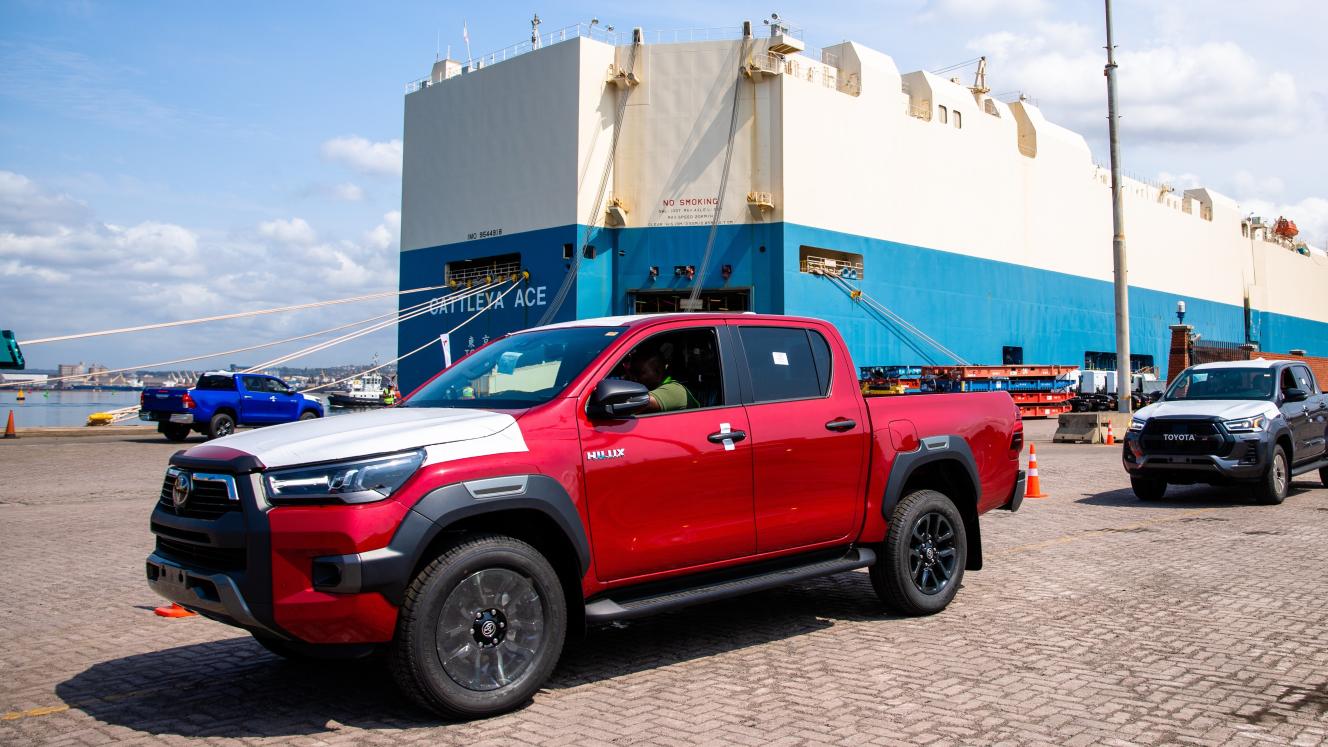
A throughput total of 792 574 fully built units (FBU) for the period April 1 to February 15 means Transnet Port Terminals (TPT) has exceeded annual targets for the 2025/26 financial year.
“The number includes new imports, export and transshipments vehicles,” TPT says.
The logistics utility’s terminals division adds that over the past 10-month period, seven new productivity records have been set by the country’s three car terminals at Durban, Gqeberha and East London.
The above-average performance was driven by increased volumes of FBUs moving on and off car carriers.
“The introduction of new vehicle distributors such as Jameel Motors, along with the return of automotive importers including MG, JMC, TATA, and Geely to the South African market, has significantly supported the sector’s improved performance,” says TPT.
“Locally based automotive original equipment manufacturers have also contributed to the positive trajectory, with exports meeting EU emission standards and boosting international demand. New models such as the Ranger PHEV and BMW hybrid, introduced in late 2024, began ramping up production in 2025, further strengthening export volumes.”
Transshipment activity has also shown notable improvement, TPT adds.
“Despite strong competition from port terminals along the eastern coast of Africa, transshipment volumes continue to rise – contributing significantly to overall volume growth, which further positions TPT’s automotive terminals as a preferred automotive hub.
“According to the country’s Automotive Business Council (The National Association of Automobile Manufacturers of South Africa), South Africa’s new vehicle market delivered a landmark performance in 2025, finally recovering above 2019 pre-pandemic levels and hitting highs not seen in a decade.
“This upward swing, closely tied to broader economic improvements, was significantly buoyed by a cumulative 150bps in interest rate cuts since September 2024, record-low vehicle inflation, an influx of affordable model imports, and the liquidity injection from the ‘two-pot’ retirement system withdrawals.”