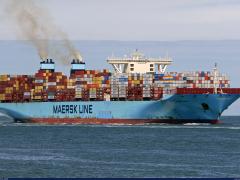
Despite the growing modal shift from air to ocean, the International Air Transport Association (Iata) is predicting growth in air cargo tonnage this year and 4% growth over the coming few years. Michel Looten, director of marine at Seabury Group, a marine consultancy, said last month that shippers had found ways to send by sea many of the goods that had traditionally been flown – ranging from fresh flowers and other perishables to fashion goods, electronics, pharmaceuticals and more. Spokesperson for Iata, Chris Goater, agreed that the maritime sector had been introducing innovations that allowed perishables to travel by sea. He also admitted that there was competition from rail but said that Iata had responded to the challenge by encouraging the air freight industry to achieve up to a 48-hour cut in average shipping times by 2020. “This increased speed will be matched with improved reliability, transparency and consistent quality,” said Goater. He told FTW that shippers still wanted a modal choice and wanted to ship by air if the cost/benefit worked. “Through working together, airlines and freight forwarders can enhance the value proposition for airfreight.” According to Goater, an example of this would be the electronic Air Waybill (e-AWB) – the first step in making the air cargo system paperless. “This is gaining momentum and we expect to reach our target of 22% penetration by the end of this year.” He noted that airlines would need to learn from the best practices of each other and be similarly innovative to create value. “The success of the cargo carriers in the Gulf has been built, to some extent, on their success in opening new markets into Africa and the Far East. And the integrators continue to innovate and take market share,” said Goater.
Airfreight industry fights modal shift
Comments | 0
© Now Media. This content is protected by copyright and may not be adapted or republished. If you would like to discuss cooperation opportunities, please contact: editor@freightnews.co.za.