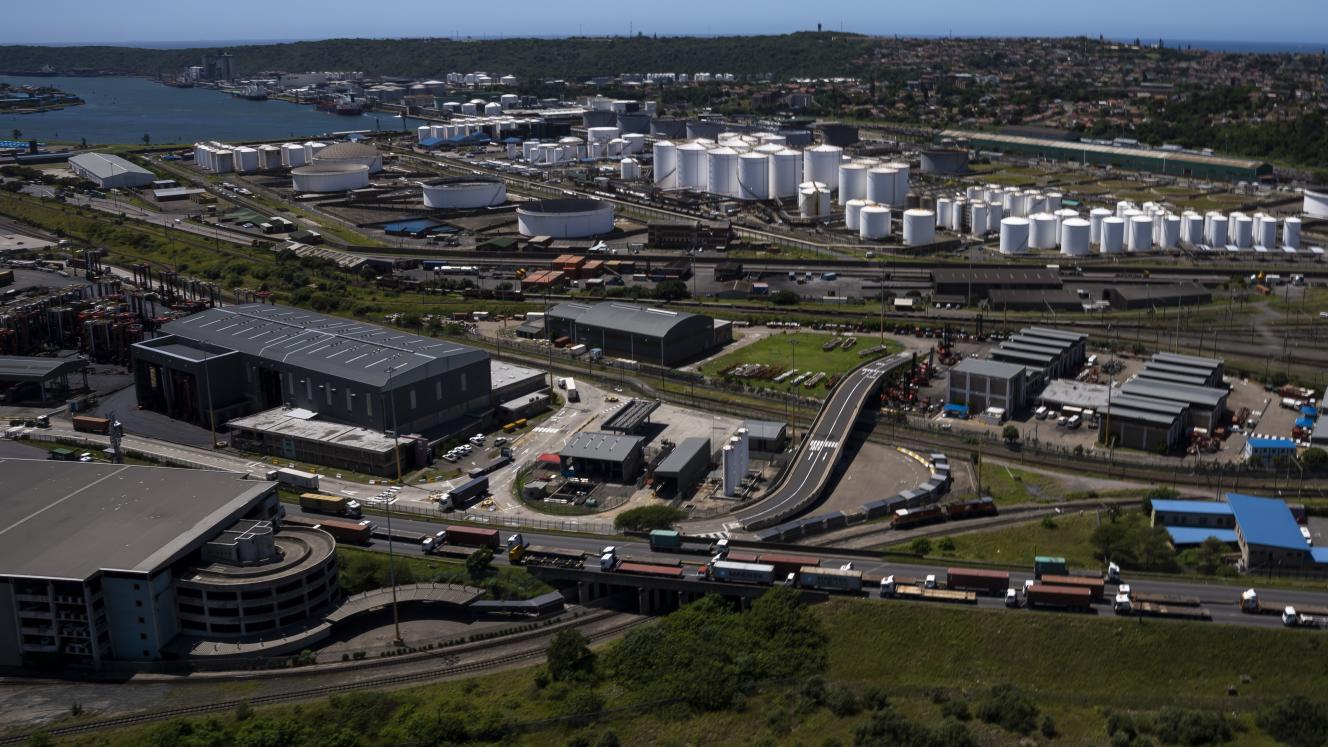
African exports will continue to be uncompetitive due to high logistics costs until the continent takes the rail focus away from the movement of bulk and focuses on the transport of general cargo instead. The Africa land mass of 30 million square kilometres is served by just 66 011 km of rail, most of which is “concentrated in the coastal areas established in the colonial era to transport raw materials and labour to ports,” says John Meyer – Mining Analyst/Partner SP Angel. Meyer said in contrast India, at three million square kilometres, was served by a rail network of 63 974 km which “allows transportation between states supporting labour migration and intraregion trade”. The impact is measurable: South Africa scores 3.7 in the global Logistics Performance Index, putting it 23rd in the world and number one on the continent. African number two is Egypt, which is ranked 57th in the world. Intra-African trade – which should be a significant driver of economic growth – is one of the casualties. According to a United Nations Conference on Trade and Development (Unctad) 2013 report on Intra-Africa trade between 2007 and 2011, the average share of intra-African exports in total merchandise exports in Africa was 11%, compared to 50% in developing Asia, 21% in Latin America and 70% in Europe. As a result, South African manufacturers and exporters have few logistics advantages over their competitors elsewhere on the globe. For mining companies focusing on the export of raw materials there is, however, good news. New rail links are being laid and existing links upgraded from mining areas to the ports across the continent. Major projects in Southern Africa include a US$1.1bn project to connect Chingola (Zambia) and the Benguela line (Angola) through a 554km link; US$3bn is to be spent on a 525km line from Tete province in Mozambique to the coastal Macuse (north of Beira), and a new port to handle 25 million tons a year (mpta); and US$4.4bn is being spent by Vale to upgrade the Nacala port and build a 912km railway link from Tete to Nacala (Mozambique) through Malawi. This is in addition to the Transnet plans to spend R205bn to grow rail capacity from the current 200mtpa to around 350mtpa in the 2013- 2019 period.
Africa logistics loses competititveness battle
Comments | 0
© Now Media. This content is protected by copyright and may not be adapted or republished. If you would like to discuss cooperation opportunities, please contact: editor@freightnews.co.za.