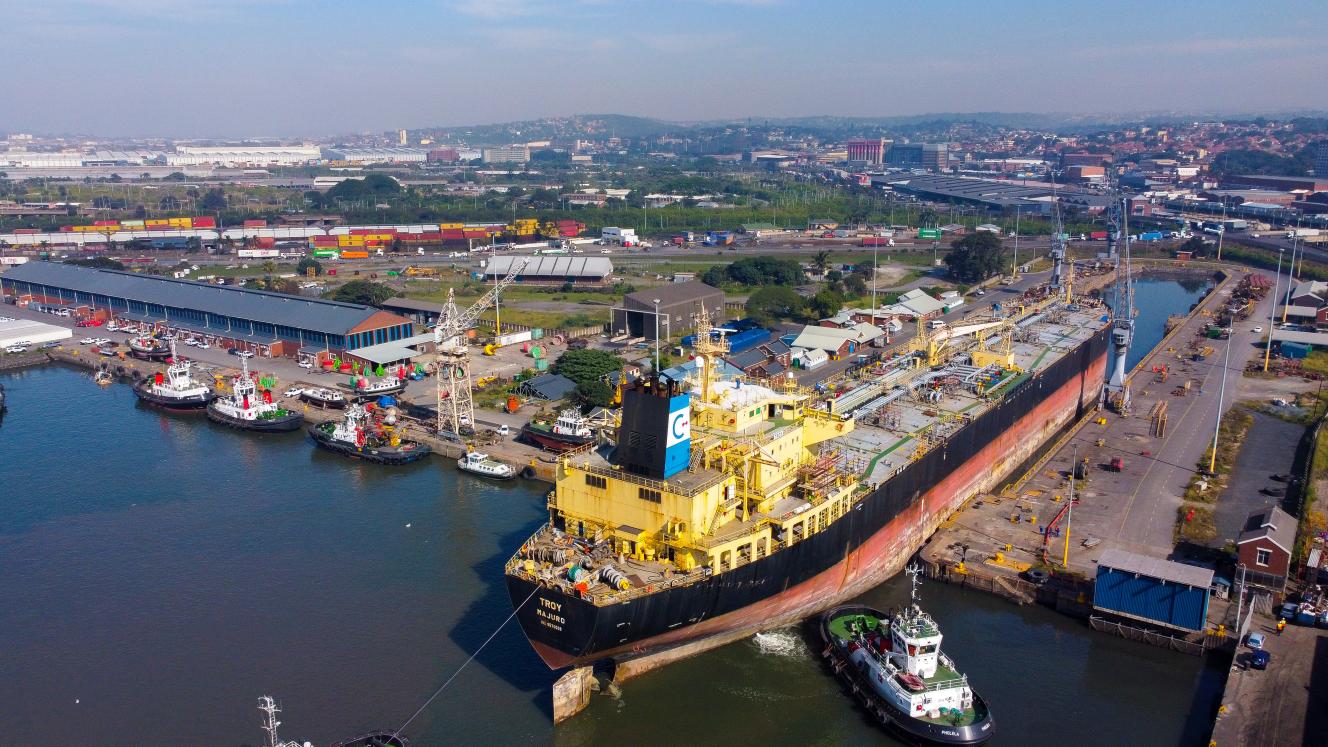
Seen as one of the most significant “disruptive” manufacturing technologies in over 100 years, the rise of 3-D printing has implications for the future of warehousing. It is already reducing the demand for warehouses for the storage of foundry master moulds. Instead of shelves of mould masters the designs are now simply stored digitally, with the sand mould printed to order. Inventory levels of fast moving consumer goods are also being reduced because 3-D printing allows companies to respond to fastchanging fads and fashions, according to research company Gartner. Its predictions are backed by consulting firm McKinsey which says 3-D printing, or additive manufacturing, has come a long way from its roots in the production of simple plastic prototypes. Modern 3-D printers can handle materials ranging from titanium to human cartilage, and also produce fully functional components, including complex mechanisms, batteries, transistors and LEDs. Printers can build increasingly larger components and achieve greater precision and finer resolution at higher speeds and lower costs. A Chinese company has developed a printer that builds houses, while a Chicago-based company printed an electric car in September 2014. Together, these advances have brought the technology to a tipping point, according to researchers. It has evolved rapidly from laboratory to factory floor. Boeing, for example, already uses printers to make some 200 part numbers for 10 different types of aircraft, and medicalproducts companies are using them to create offerings such as hip replacements. McKinsey Global Institute says 3-D printing could disrupt existing logistics supply lines, including warehousing and port operations as manufacturing is moved to the point of use. The supply of service parts may even be outsourced: small fabricators (or fabs) located, for example, at airports, hospitals, or major manufacturing venues could make these parts for much of the equipment used on site, with data supplied directly by the manufacturers. Alternatively, companies could find that the fully digital nature of 3-D printing makes it possible to produce complex parts in remote countries with lower input costs for electricity and labour, according to McKinsey. The technology could provide a solution to the challenge of managing appropriate inventories of spare parts, particularly for older, legacy products. Relatively small facilities with on-site additive manufacturing capabilities could replace large regional warehouses, predict McKinsey researchers Daniel Cohen, Matthew Sargeant and Ken Somers. They believe that 3-D printing also opens up the market to newcomers – and to suppliers of third party logistics. “New businesses are already popping up to offer highly customised or collaboratively designed products. “Others act as platforms for the manufacture and distribution of products designed and sold online by their customers. “These businesses are gaining insights into consumer tastes and building relationships that established companies could struggle to match. “Initially, these new competitors will be niche players, operating where consumers are willing to pay a premium for a bespoke design, complex geometry, or rapid delivery. “Over the longer term, however, they could transform industries in unexpected ways, moving the source of competitive advantage away from the ability to manufacture in high volumes at low cost and toward other areas of the value chain, such as design or even the ownership of customer networks,” they predict. INSERT 3D printing could disrupt existing logistics supply lines, including warehousing and port operations, as manufacturing is moved to the point of use.
3-D printing could disrupt warehousing
Comments | 0
© Now Media. This content is protected by copyright and may not be adapted or republished. If you would like to discuss cooperation opportunities, please contact: editor@freightnews.co.za.