Next week will have a distinct decarbonisation flavour when the International Maritime Organization’s (IMO) Marine Environment Protection Committee (MEPC 84) meets in London.
Top of the agenda will be diplomatic discussions aimed at seeking consensus about the IMO’s Net Zero Framework (NZF) for stripping pollutants out of shipping fuel.
Whether or not the NZF remains a feasible reality will most likely be the single biggest outcome of MEPC24.
Marine bunker entity Engine stated on April 17 that divisions had emerged ahead of next week’s gathering, with Greek shipowners, including the Union of Greek Shipowners (UGS) and the Angelicoussis Group, opposing key elements of the NZF.
Primary among these is the carbon pricing mechanism of the NZF, viewed as essential for emissions reductions.
On Monday, April 20, major shipping organisations, including the International Chamber of Shipping, the Baltic International Maritime Council (Bimco), Cruise Lines International Association, World Shipping Council, INTERTANKO, INTERCARGO and Interferry, issued a joint statement reiterating support for an IMO-led framework.
Bimco added that the joint statement emphasised regulatory certainty, technological neutrality, avoidance of double penalties and commitment to the 2023 IMO Green House Gas Strategy, with billions already invested in alternative fuels and technologies.
The Engine statement also expressed concern about Panlibarg, the grouping consisting of Panama, Liberia and Argentina, which is proposing to eliminate tax incentives for greener fuels.
The bunker company said Panlibarg’s proposal could potentially undermine investments amid doubts over alternative energy readiness.
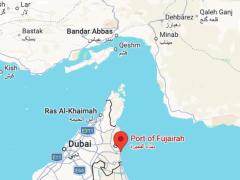
Fears have also been expressed that the current situation in the Strait of Hormuz could slow down pro-NZF momentum.
The Clean Energy Forum at Yale University said the decarbonisation debate centred on data-driven, fuel-neutral regulations supporting transitional fuels, especially liquid natural gas and biofuels.
Included are green technologies such as wind propulsion and carbon capture.
Essentially, MEPC 84 will decide whether to proceed with the NZF or delay the framework further against the backdrop of resistance from Greek interests to the IMO’s decarbonisation efforts.