South African citrus producers are set to benefit from improved export efficiencies to China following the amendment of the plant health protocol governing citrus shipments to the key Asian market.
The Department of Agriculture (DoA) and the Citrus Growers’ Association of Southern Africa (CGA) jointly announced the successful update on Friday, which introduces additional phytosanitary pest risk mitigation treatment options.
The changes, based on scientific work from Citrus Research International (CRI), are the result of collaborative engagement between South African and Chinese authorities.
“The amended protocol introduces additional phytosanitary pest risk mitigation treatment options, reflecting a science-based and risk-managed approach to plant health compliance,” the joint statement said.
The new treatment options are expected to improve the quality of fruit reaching Chinese consumers while reducing costs and enhancing export efficiencies for South African producers and exporters.
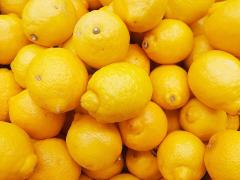
China remains an important destination for South African citrus, particularly navel oranges, lemons and grapefruit. In 2025, exports to China and Hong Kong accounted for approximately 11.5m cartons, or 6% of total citrus exports.
The industry sees significant potential for growth, supported by strong consumer demand and South Africa’s counter-seasonal supply, which complements China’s domestic production and helps keep fruit available year-round.
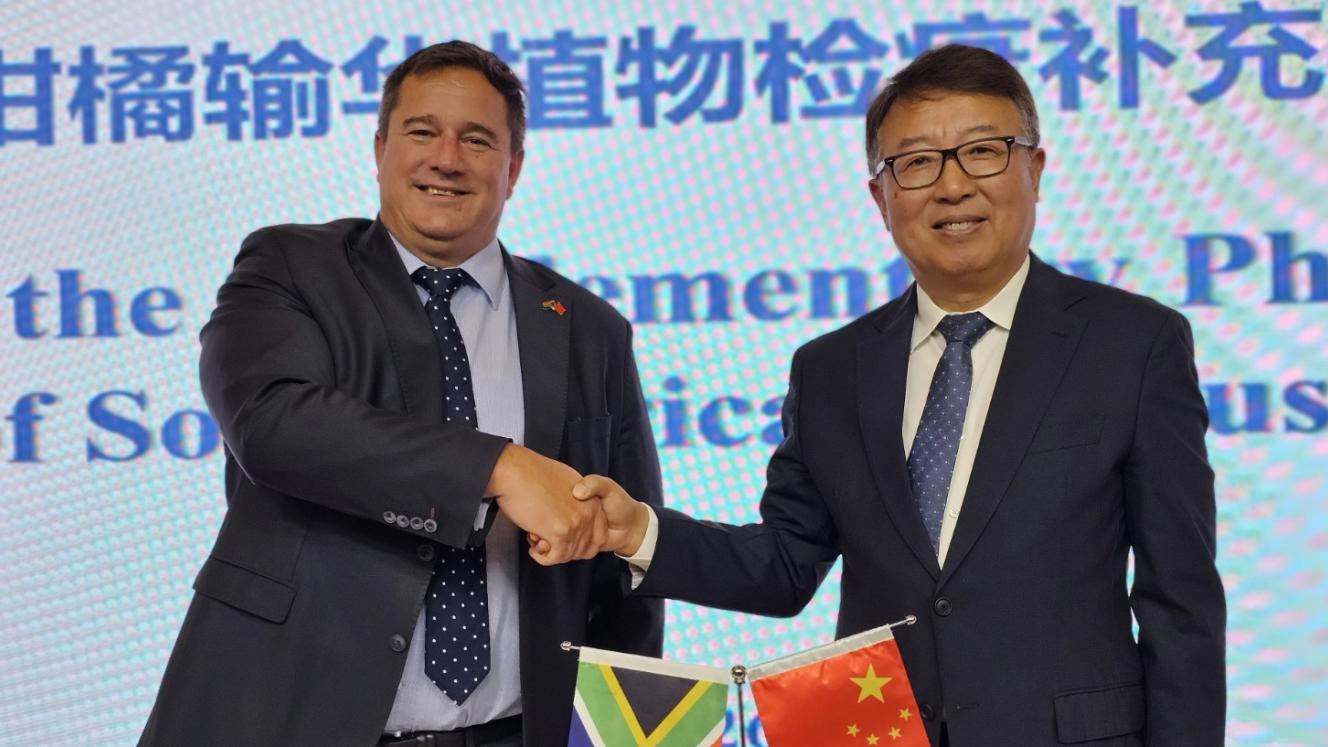
Minister of Agriculture John Steenhuisen welcomed the development, highlighting the value of the bilateral relationship.
“South Africa places a high value on its relationship with China, which continues to create meaningful opportunities across our agricultural sector,” Steenhuisen said.
“These agreements are the result of trust, respect and sustained cooperation, and they are helping open doors for our producers at a time when diversification has never been more important.”
Chinese Ambassador Wu Peng, speaking at the signing ceremony in Pretoria, emphasised the mutual benefits.
“South African citrus has excellent quality and complements China’s domestic citrus production due to your counter-seasonal supply. That is a very positive contribution to Chinese consumers’ fruit baskets. With China’s huge market of 1.4 billion people, our cooperation has enormous potential and bright prospects,” he said.
“This agreement for further access to the Chinese market cannot be more timely because South Africa’s citrus season this year is just beginning and going very strong. It reflects the high level of China-South Africa bilateral relations and the deep friendship between our peoples.”
CGA chief executive Dr Boitshoko Ntshabele said the association remained committed to collaboration.
“The CGA remains committed to working closely with government and international partners to strengthen market access, uphold high phytosanitary standards and support the sustainable growth of the citrus industry,” he said.
The CGA has welcomed broader economic cooperation between the two countries, including the Economic Partnership Agreement Framework signed in February and planned unilateral tariff reductions. The association is advocating for citrus to be included in the “Early Harvest” agreement to allow early benefits in the 2026 season.
South Africa’s citrus industry is a major contributor to agricultural exports.
In 2025, southern Africa exported approximately 204 million cartons of citrus, with South Africa accounting for about 193m cartons. Export earnings reached an estimated $2.47 billion for the first time, making the country the world’s second-largest citrus exporter.
The sector supports approximately 140 000 direct jobs at farm and packhouse level, with additional employment generated across the value chain in logistics, export services and distribution.
The amendments build on recent trade gains, including the opening of the Chinese market to South African stone fruit such as apricots, peaches, nectarines, plums and prunes.