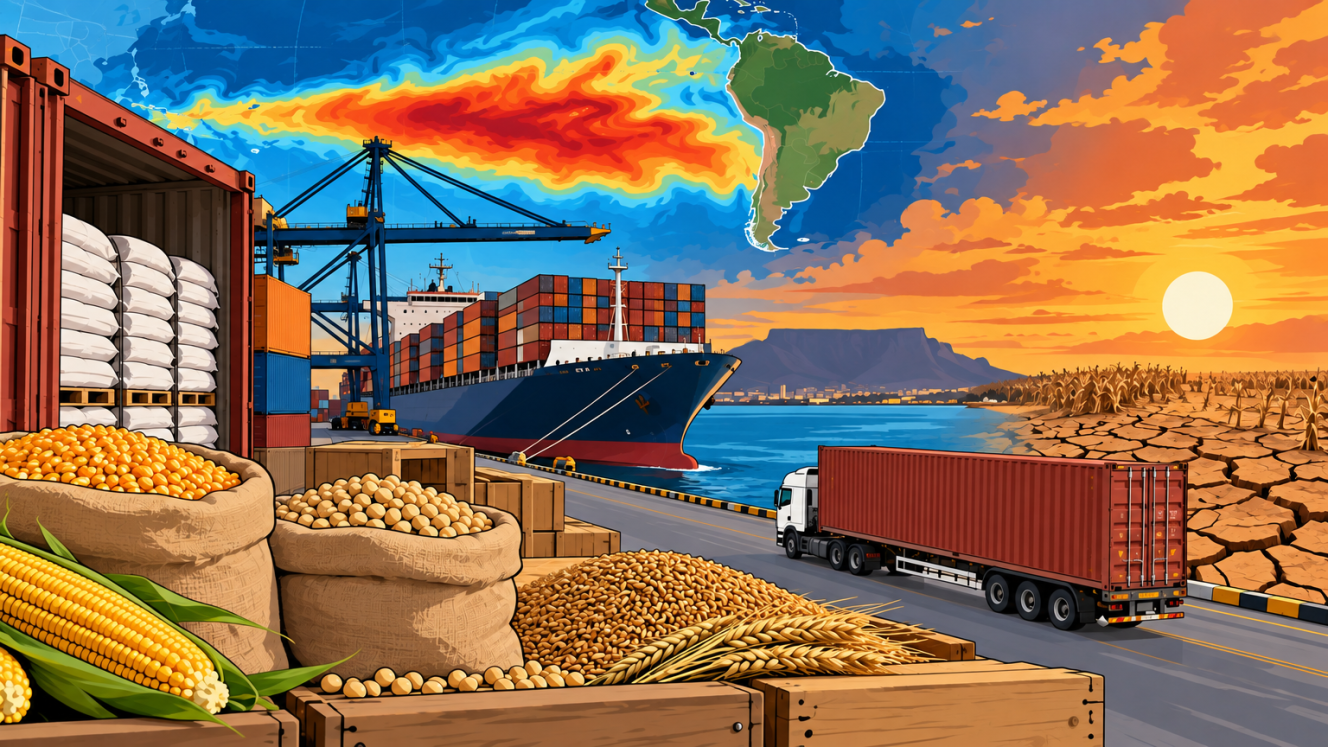
A strengthening El Niño is raising risks for South Africa’s coming agricultural season although it remains too early to attribute changes in deciduous fruit production or exports to the phenomenon, according to industry specialists.
The current strong El Niño is expected to strengthen towards a very strong state over the next few months and persist through at least the end of the 2026/27 summer season, the South African Weather Service said in its September 30 Climate Watch.
For freight operators and exporters, the emerging concern is how growing conditions could affect the volume and timing of agricultural shipments as the season progresses.
Agriculture is entering the summer crop season from a relatively favourable position, following good rainfall and improved soil moisture during 2025/26, Agbiz Chief Economist Wandile Sihlobo told Freight News.
“While we expect the season ahead to be challenging for the sector, we don’t anticipate a major reduction in the area planted for now,” Sihlobo said.
Favourable soil moisture could support planting while shorter-season crop varieties could perform well if moisture remains sufficient early in the season, he added. However, the timing of rainfall is critical.
The implications differ for the deciduous fruit sector with about 88% of South Africa’s pome and stone fruit production concentrated in the Western Cape’s predominantly winter rainfall region.
El Niño does not directly impact the region’s winter rainfall, Hortgro Head of Science Wiehann Steyn said. However, growers have started irrigating earlier in drier conditions after heavy rainfall in May.
“Growers will follow strict water use protocols and manage water supplies closely as the season unfolds,” Steyn told Freight News.
The current El Niño’s effects have not yet clearly materialised in the pome and stone fruit sector, Hortgro Agricultural Economist and Information Manager Pieter-Steyn de Wet said.
“It is too early to attribute changes in production or exports directly to the phenomenon,” he said.